Brought up in Mumbai, Aseem Bhatnagar is a passionate traveler who seeks to travel and explore the length and breadth of India. He enjoys walking a lot on his travels and believes it is the most exhaustive way of exploring a place.
He is a dedicated travel writer, blogger and amateur photographer by heart and also an adventure freak. He is currently focused on writing about different places in India and several adventure activities along with religion, festival, heritage, people and cuisines of India.
Location: Can be reached via Karjat / Lonavala Distance from Mumbai: 95 Km Distance from Pune: 80 Km Trekking Duration: 1 day Trek Length: Via Lonavala: 2 hr. / Via Karjat : 2 hr Starting Point: Base village Udhewadi Best Season to Visit: All round the year (Monsoon preferable) Difficulty Level: Easy Height: 826 mt (2710 feet) above sea level
A brief history :
It is believed that the Rajmachi fort was first established by the Satavahanas. In recent history the fort was in control of the Marathas under the leadership of Shivaji Maharaj during the 16th century and served as a strategic fort to control the historical trade routes. Later in the 17th – century the fort was captured by the Mughals for a brief period be recaptured by the Marathas again and finally, after the downfall of the Maratha empire the ownership of the fort was taken by the British empire.
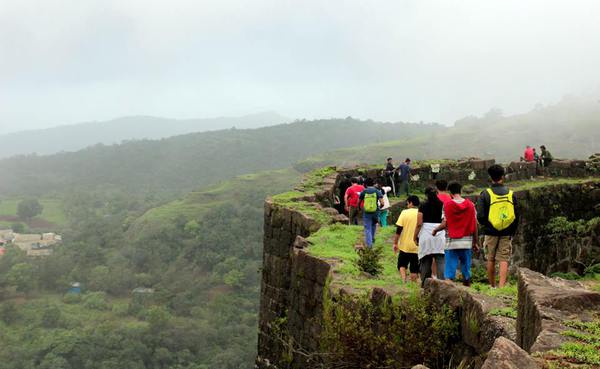
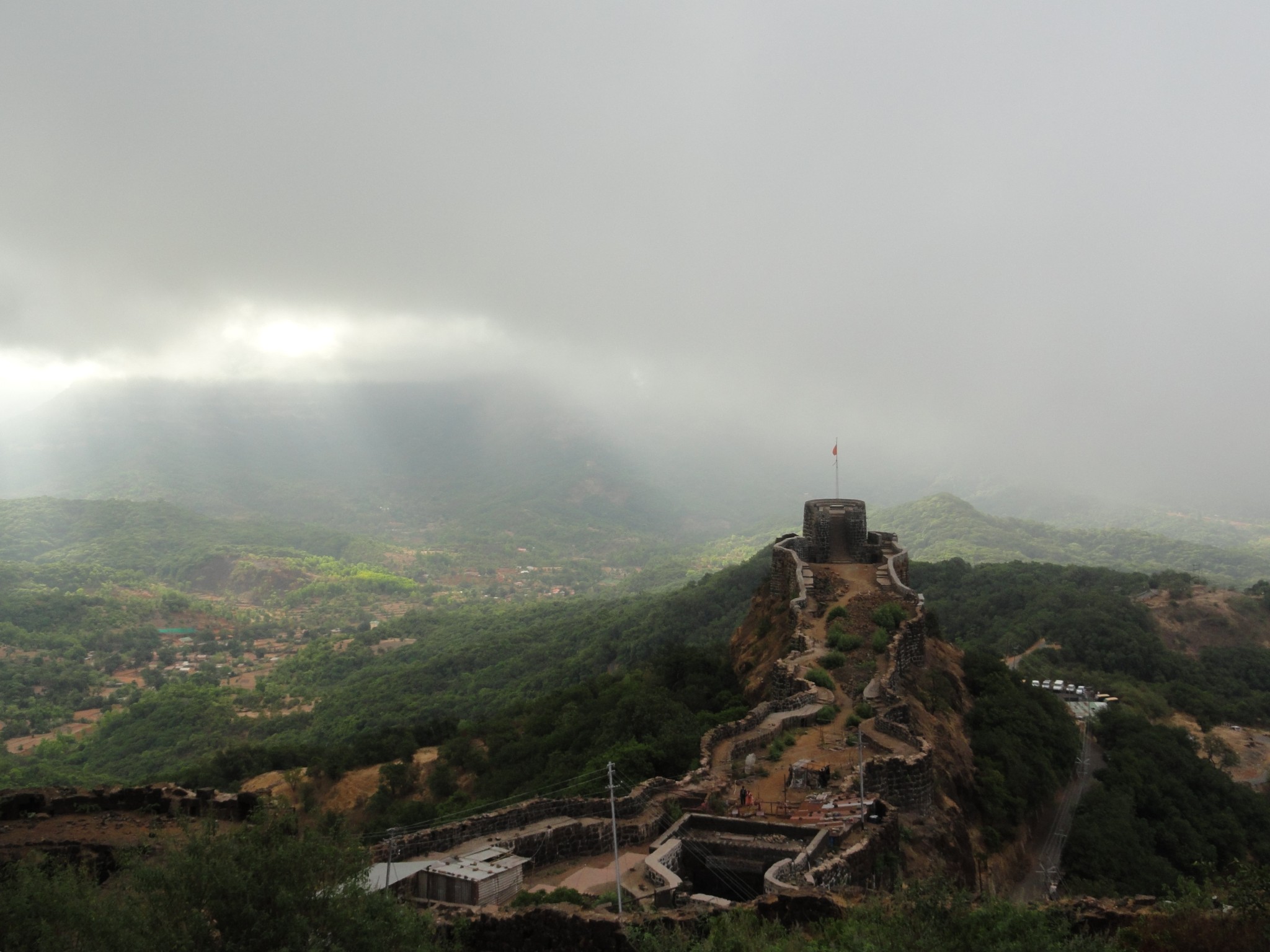
Rajmachi Fort during monsoon
Located in the Sahyadri mountain ranges near the twin hill stations of Lonavala and Khandala is the beautiful Rajmachi fort.The Rajmachi peak offers breathtaking views of the valley and has 2 fortified structures i.e. Shrivardhan fort and Manaranjan fort. The fort offers one of the most beautiful treks near Mumbai.
Rajmachi can be reached by 2 routes i.e. via Kondivade village near Karjat, which involves a climb-up of about 2000 feet.While the other route is from Lonavala, which is easy and almost a 20 km plain trek via Udhewadi village.
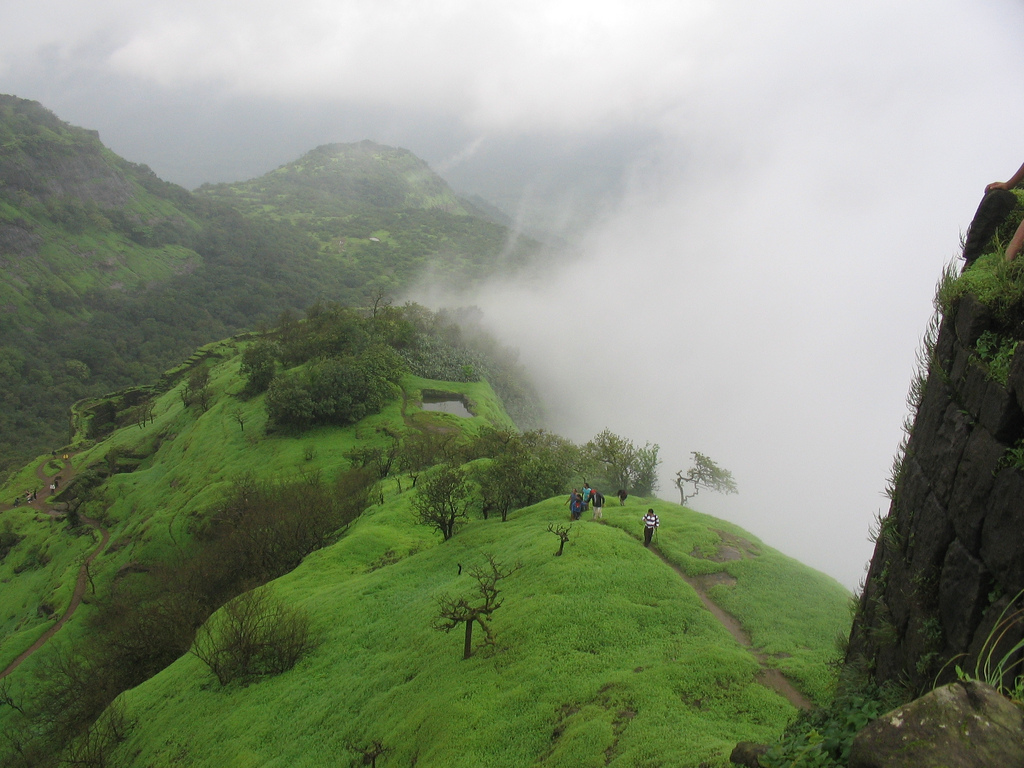
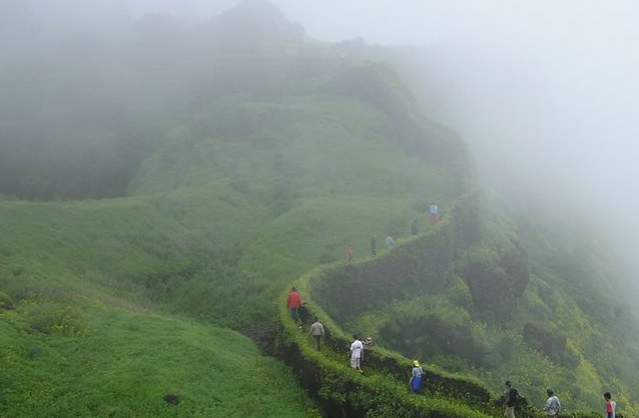
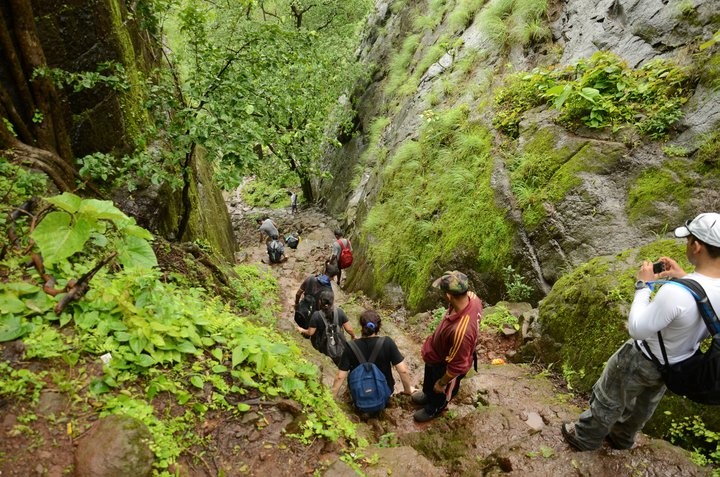
Trekkers enjoy their trek trek through the cold mist
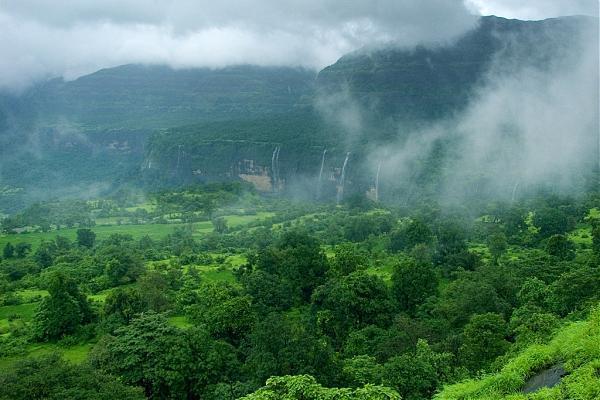
The trekking route on both sides is surrounded by dense forests hence during monsoon trekkers will pass by beautiful waterfalls, streams and lush green landscapes.
A view of waterfalls and scenic landscape from Rajmachi Fort.
What to see at the fort:
The fortified structures of Shrivardhan and Manaranjan
Buddist Caves
Kal Bhairava temple and ancient monuments.
Might walls and gateways
Secret exit gateways
Water storage tanks
Residential quarters now in a state of ruin
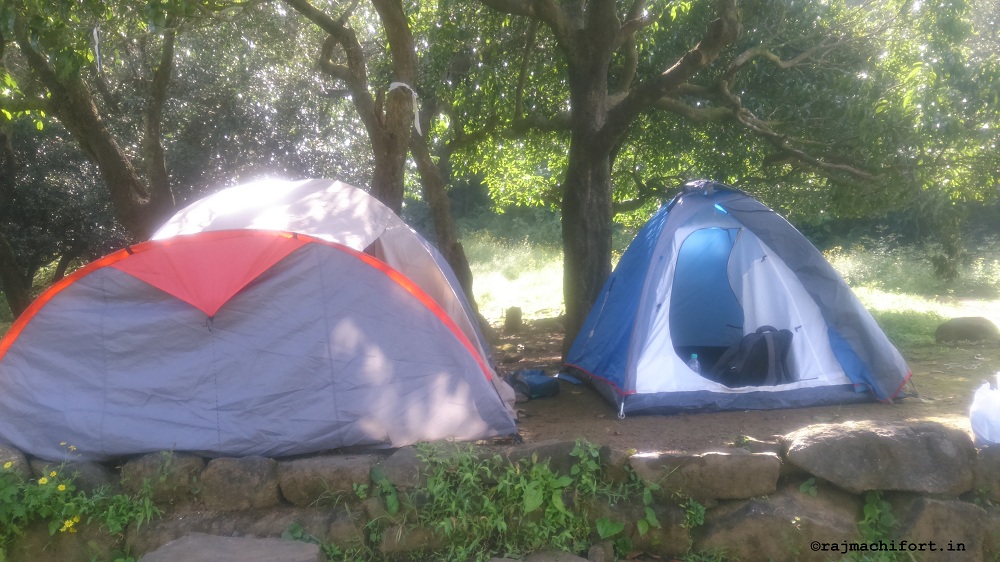
Nature camping at Rajmachi Fort
Camping Info:
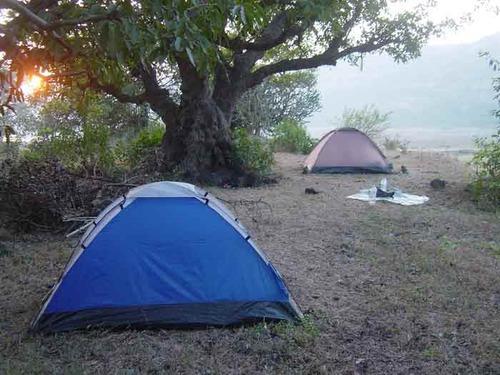
During monsoon ideally avoid camping as it can be dangerous unless you are part of a professional group of trekkers and campers. Otherwise Rajmachi fort is an ideal fort for camping. There are 2 caves within the vicinity and can accommodate a large group of campers. In case you would not like to camp in the wild you can opt for a stay at the Kalbhairavnath temple which is at the base of the fort.Trekkers will also find camping facilities at the base village of Udhivade.
How to reach:
Trekkers from Mumbai can reach Lonavala or Karjat by bus, train or car, from there on trekkers can reach the Rajmachi fort by the following routes.
From Lonavala they will have to reach Tungrali village and start the trek while those coming from Karjat will have to reach Kondivade village and start their trek. Both the trek routes converge at the Udhivade village which is the base village for Rajmachi Fort Trek.
Caution: The roads and trails leading to the fort are quite slippery during Monsoon so be careful while venturing on a trek.For more information read: Precautions to be taken during Monsoon trekking.
Location: Near Asangoan, Shahpur. Thane Distance from Mumbai: 92 km Distance from Pune : 190 km Trekking Duration: 1 day Trek Length: 3 hours Starting Point: Mahuli is the base village Best Season to Visit: Monsoon and winter season Difficulty Level: Medium (Beginners should avoid) Height: 860 mt (2815 feet) above sea level
A brief history : The creator of this fort is unknown, but the fort, traces its origins to the 15th century and has been ruled by several rulers, the prominent ones being the Marathas and the Mughals.
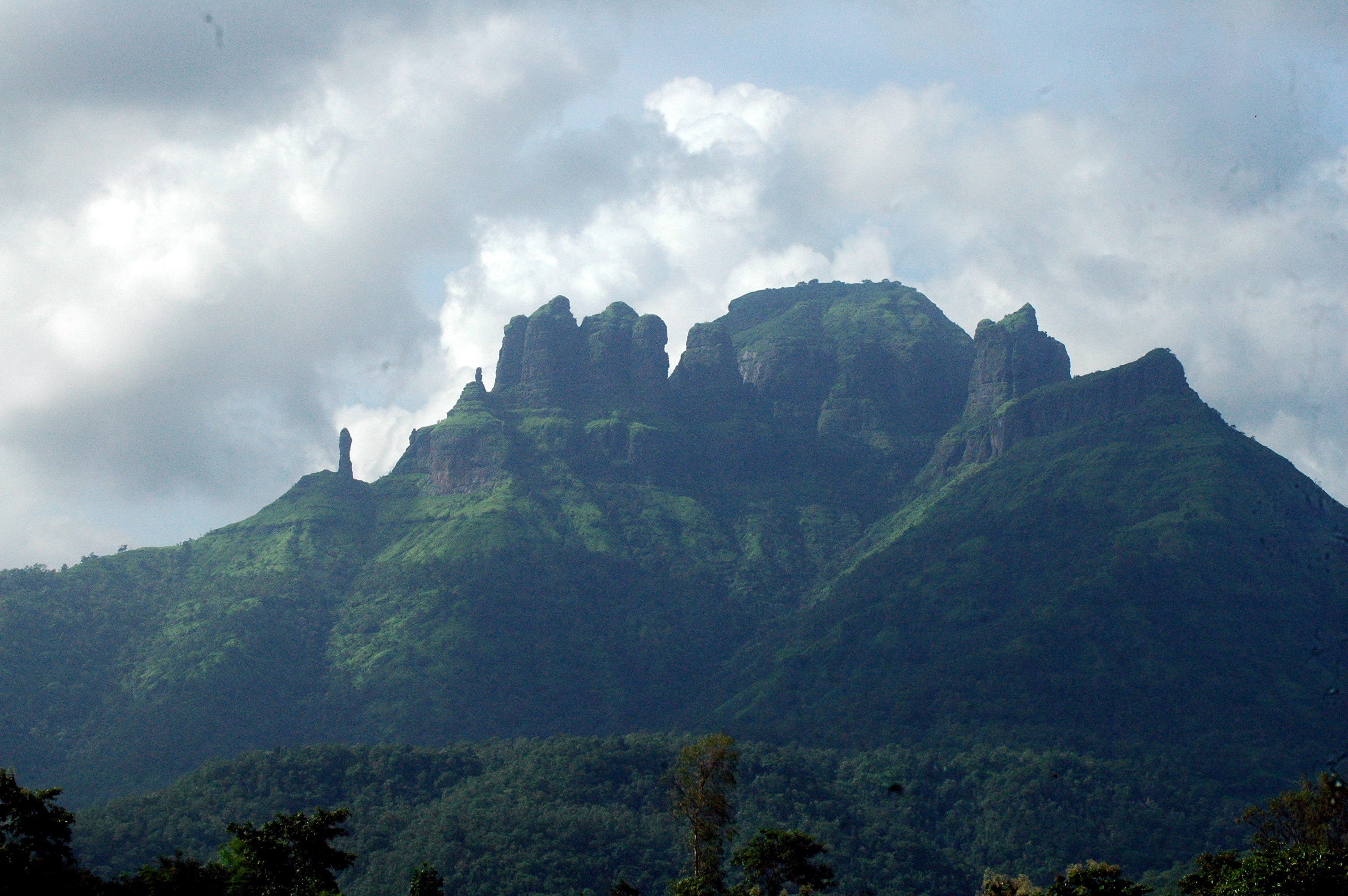
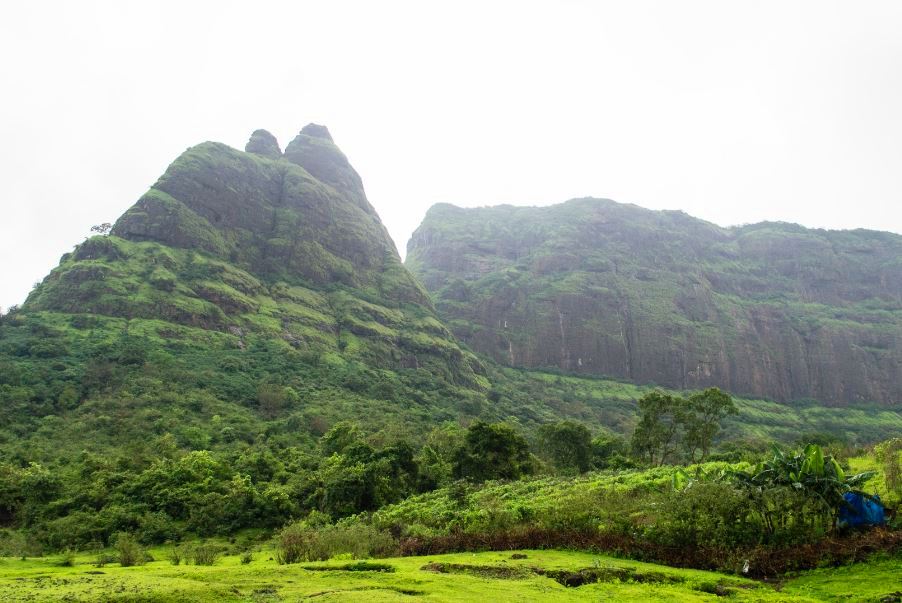
The Mahuli Mountain is the highest in the Thane district and is famous for its pinnacles. The trek covers 3 hills and every year experienced trekkers and rock climbers plan their expedition here.
Rock climbing at Mahuli Fort
Monsoon and winter are ideal for trekking and rock climbing at Mahuli, but this trek is not advisable for beginners as the trek has several steep climbs and above all it’s a long trek that takes about 3 hours to reach the top.
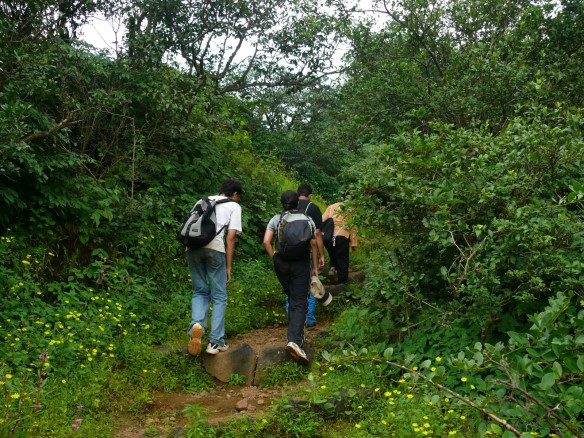
Trekkers make their way through the dense trails of Mahuli
The trek begins at Mahuli village and it’s a well marked trek till the summit. It is highly recommended to travel in a big group for this trek as in the recent years there have been leopard sightings, but let this not deter you from taking this trek as wildlife sightings are a rare phenomenon. Furthermore do carry sufficient amount of water and food.
Over the recent years Mahuli has become popular with trekkers and is a paradise for rock climbers because of its pinnacles. The forest surrounding Mahuli has now been declared a sanctuary and the fort has been declared as a protected monument by the ASI.
At the summit
What to see at the fort:
Remote Village
Waterfalls and fresh mountain water at the top
Dense Forest
Ancient Caves
Shiva temple
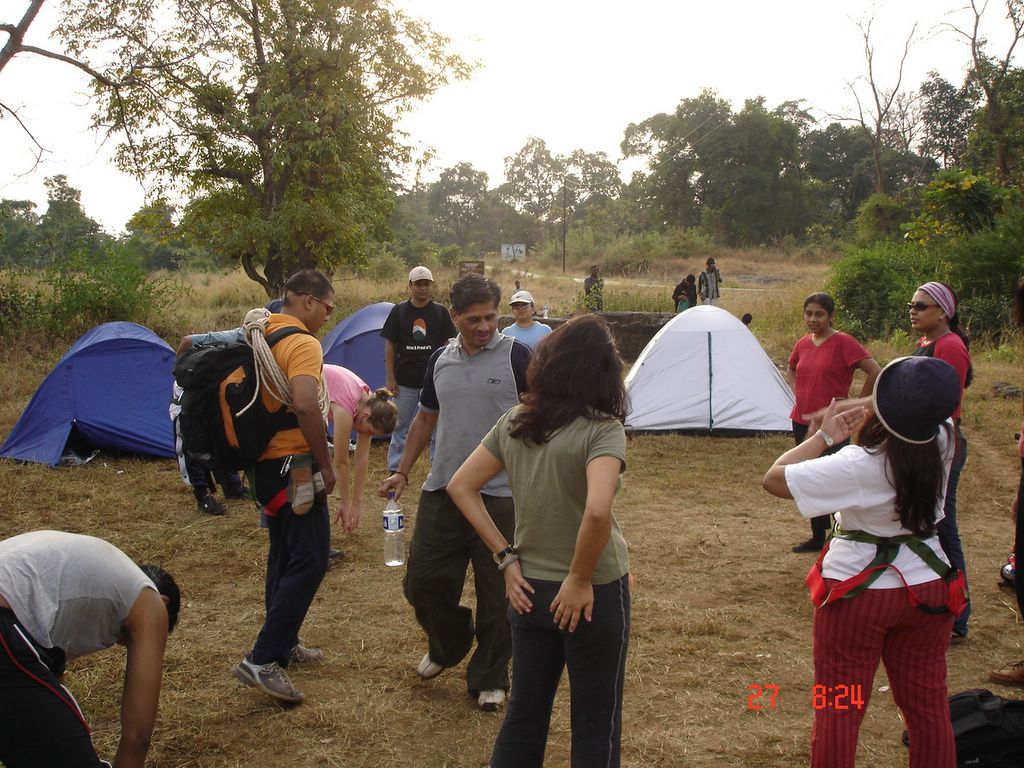
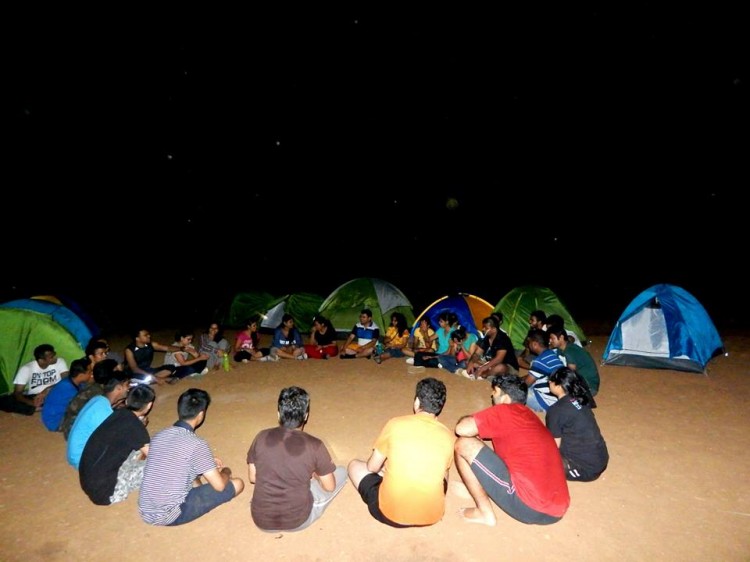
Camping at Mahuli Fort
Camping Info:
One can consider camping atop the fort or even stay at one of the ancient caves. But ideally care your own tent, lots of water, snacks and ready to make food in case you plan to camp at the fort. There is a small hotel at the base village which provides snacks, tea and staying facility which is limited.
How to reach:
From Asangoan station there is public transport available up to Mahuli village which is about 5 km away and is the starting point of the trek.
Caution: The roads and trails leading to the fort are quite slippery during Monsoon so be careful while venturing on a trek.For more information read: Precautions to be taken during Monsoon trekking.
Location: Pali , Pachahapur Distance from Mumbai: 110 km Distance from Pune: 120 km Trekking Duration: 1 day Trek Length: 2 hours Starting Point: Pachchapur ( Thakurwadi village) Best Season to Visit: Monsoon and Winter season Difficulty Level: Easy Height: 590 mt (1935 feet) above sea level
A trekker makes his way on the wet stairs of Sudhagad Fort during the monsoon
A brief history : The origins of the fort can be traced to the 2nd – century when it was originally called as ‘Bhorapgad’. According to historical records, during the early part of the 15th – century the fort was captured by the Bahamani Sultan and later in the 16th – century it was captured by the Marathas and named ‘Sudhagad’ which means Sweet One in Marathi.
The Sudhagad fort is one of the most beautiful forts in the Sahyadri ranges and is mostly visited by trekkers for a one day trek as it has a very easy endurance level.Sudhagad is an amazing place to trek during the monsoon and seems like a stairway to heaven. The fort is surrounded by lush greenery and the weather is just beautiful.
Trekkers have a good time at the summit
Once at the summit there is a 50 acre plateau with undulating green meadows and is a perfect place to sit or lie down and stare at the beautiful landscape amidst the clouds.
One of secret escape routes at Sudhagad Fort.
What to see at the fort:
Massive gateways of the fort
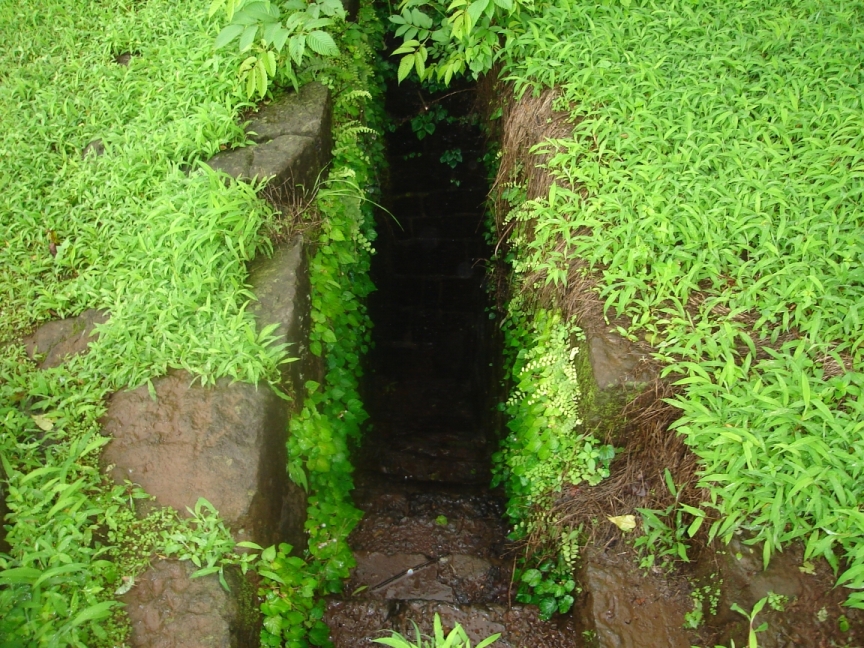
Secret escape routes within the fort
View of the surrounding valleys and mountains
Water reservoirs at the top
Old ruins
Temples of Lord Shiva and Bhoraidevi
Tombs
Camping Info:
Camping is a good idea at Sudhagad fort only if you plan to trek the Sarasgad fort nearby too otherwise it is not sensible to camp here if you are just trekking at Sudhagad fort. There are a few ancient caves where trekkers can take shelter, but it is strongly recommended to take your own tents along and carry some ready to cook food that can be made easily on a bonfire, also do carry sufficient water.
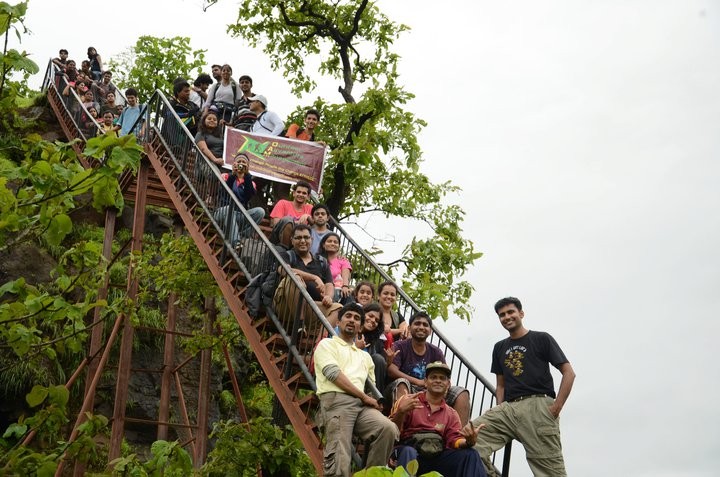
Trekkers pose for snaps at the iron stairway at Sudhagad Fort
How to reach:
From Mumbai or Thane trekkers can board public transport buses upto Pali. From Pali they can take a local transport upto Pachchapur which is 12 km away. After reaching Pachchapur they can walk up to Thakurwadi village which is 1 k m away and is the base village for the trek.
The best way to reach Sudhagad Fort is by car and the best route from Mumbai is Mumbai -> Khopoli -> Pali -> Pachchapur village – > Sudhgad Fort
There is no train service available on this route.
Caution: The roads and trails leading to the fort are quite slippery during Monsoon so be careful while venturing on a trek.For more information read: Precautions to be taken during Monsoon trekking.
A view of the Prabalgad fort from the base village
Location: Panvel. Distance from Mumbai: 55 km Distance from Pune : 120 km Trekking Duration: 1 day. Trek Length: 1 hour. Starting Point: Prabalmachi (Thakurwadi) is the base village. Best Season to Visit: All round the year. Difficulty Level: Easy to Medium. Height: 700 mt (2300 feet) above sea level.
A brief history:
The Prabalgad Fort is situated between Panvel and Matheran at a height of 2300 feet in the Western Ghats. It was built on a rocky plateau and was known as Muranajan during the rule of the Bahmani Sultanate, but was renamed by the Marathas under the rule of Shivaji.
Trekkers make their way up to the summit.
The trek begins at the base village of Thakurwadi, initially it is an easy trek, but as it progresses, it does have a few difficult climbs and can be attempted by beginners.
A huge plateau at the top of the fort.
Once at the summit you will find a huge plateau without any fort structure, but being here is an awesome feeling as you are now at the peak in the middle of a jungle.
A splendid view of the valley and Kalavantin Durg from the Prabalgad fort
From here trekkers can enjoy splendid views of the surrounding valleys, pinnacles and landscapes. They can relax and enjoy the tranquil atmosphere which is misty and surrounded by clouds.
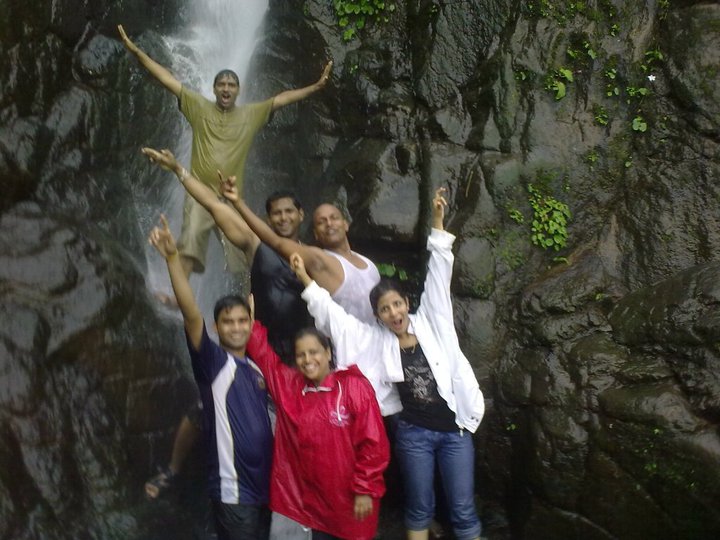
Trekkers enjoy themselves at a waterfall
Note:
Do carry sufficient snacks and water and if you are visiting this place for the first time it is advisable to hire a local guide as the trail is confusing and not well marked to the top.
What to see at and from the fort:
View of Pinnacles
View of the surrounding valleys and mountains
View of Kalavantin Durg
View of the Matheran hill range
Irshalgad Fort
View of Ulahas, Gadhi and Patalganga River
A group enjoys an overnight camp at the Prabalgad Fort
Camping Info:
Trekkers planning a twin trek to Prabalgad Fort and Kalavantin Durg can opt for camping but make sure you get your entire camping gear which includes tents. Trekkers can also opt for an overnight stay at the hotels at the base village of Prabalmachi.
How to reach:
Prabalgad fort can be reached via Panvel. From Mumbai and Thane, there are several S.T buses and other means of transport to reach Panvel.
Once trekkers reach Panvel they can again board an S.T. bus or take any other local transport (share auto rickshaws) and reach the base village Thakurwadi which is 15 km from Panvel.
Trekkers can also catch a local train to Panvel and from there on board an S.T. bus or take any other local transport (share auto rickshaws) and reach the base village Thakurwadi which is 15 km from Panvel.
Caution: The roads and trails leading to the fort are quite slippery during Monsoon so be careful while venturing on a trek.For more information read: Precautions to be taken during Monsoon trekking.
Location: Mahad, Raigad District Distance from Mumbai: 170 km Distance from Pune: 150 km Trekking Duration: 1 day. Trek Length: 1 hour 30 minutes. Starting Point: Pachad village is the base village Best Season to Visit: All round the year. Difficulty Level: Easy to Medium. Height: 820 mt (2700 feet) above sea level.
A green cover during the monsoon season
A brief history:
The Raigad fort was built by Shivaji Maharaj and was made his capital in the year 1674 when he was crowned King of the Maratha Empire. Since then the fort had an interesting history and many legends associated with it. Later during the 18th century the British laid siege and destroyed the Fort.
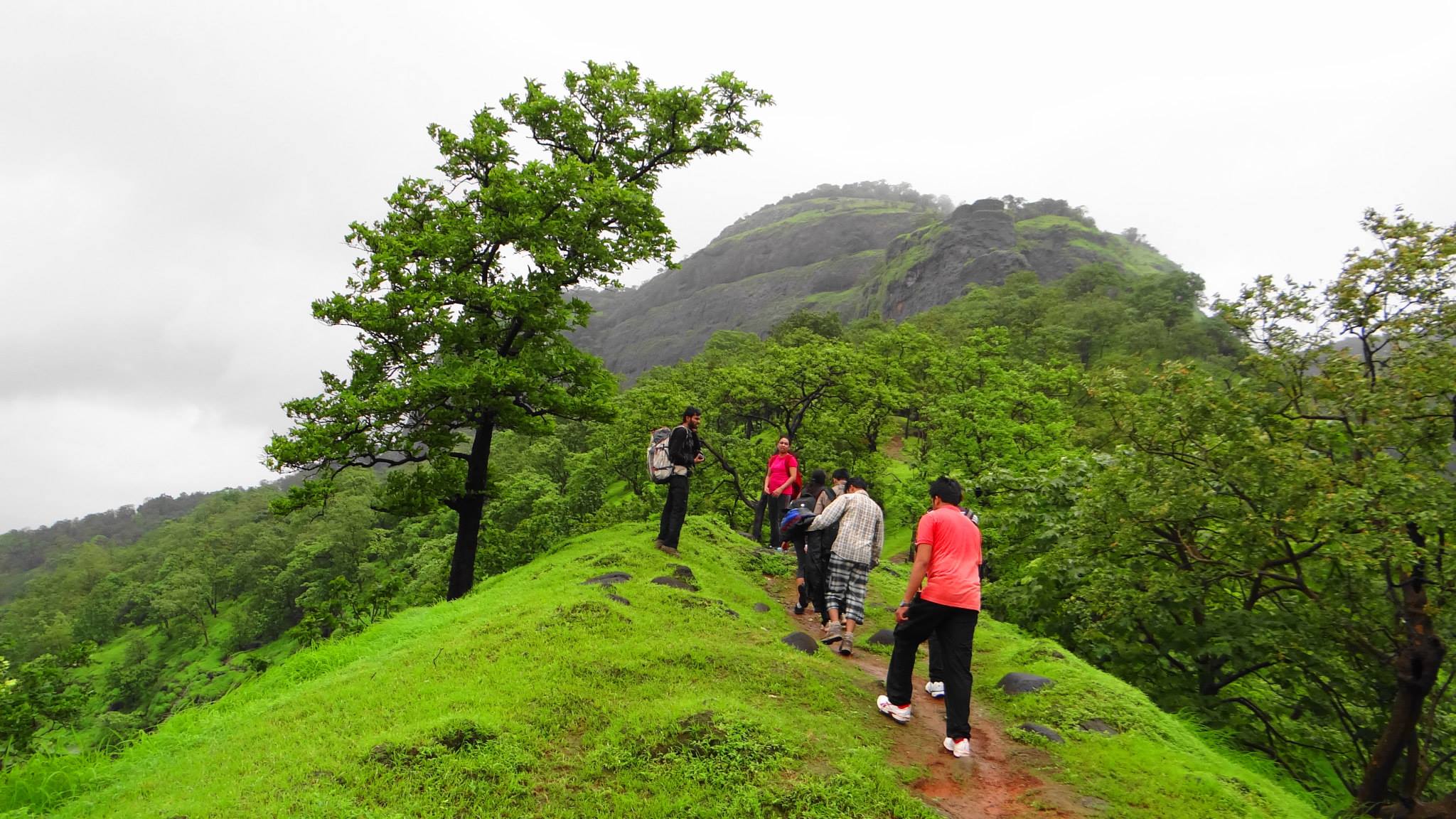
Trekkers enjoy themselves at a waterfall as they trek the Raigad Fort.
In present times, the Raigad Fort is known for its immense beauty and waterfalls and remains a paradise for trekkers, hikers and campers from Mumbai and Pune. This fort is strategically perched atop a wedge-shaped block of hill, split off from the Western Ghats and is inaccessible from three sides.
Trekkers make their way to the summit.
The fort rises at 2700 feet above sea level and is located in the Sahyadri mountain range and trekking here is a great experience. There are a series of 1750 steps that will take you to the top of the fort.
Steps leading to the Raigad fort
A trek here is completely safe and many trekkers even opt for a night trek which is a great experience. While trekking at Raigad trekkers need not worry about food and water as it is easily available at the many shops at the base and the top of the fort.
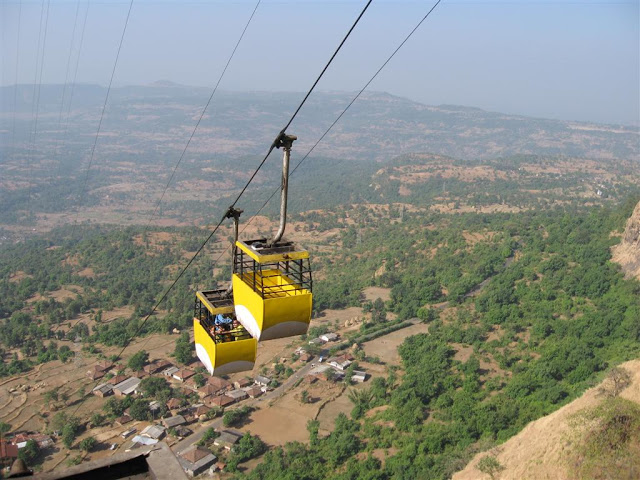
The Rope way leading to the top of Raigad Fort
For tourists who are with family and children and are not interested in trekking they can opt for the ropeway which will take them directly to the top of the fort within 5 minutes.
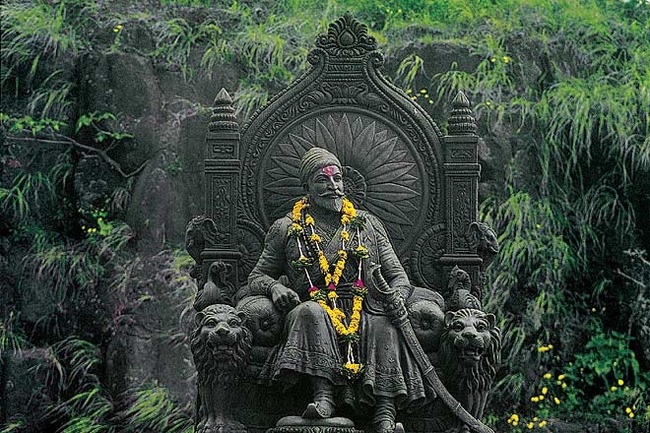
Chhatrapati Shivaji Maharaj statue in Raigad fort.
Note:
Trekkers should be aware that Raigad Fort is much more than a tourist attraction and is considered a holy place by locals and many others from different parts of Maharashtra since it is home to the Samadhi of Shivaji Maharaj hence trekkers are advised to be sensitive to the emotions attached to this fort.
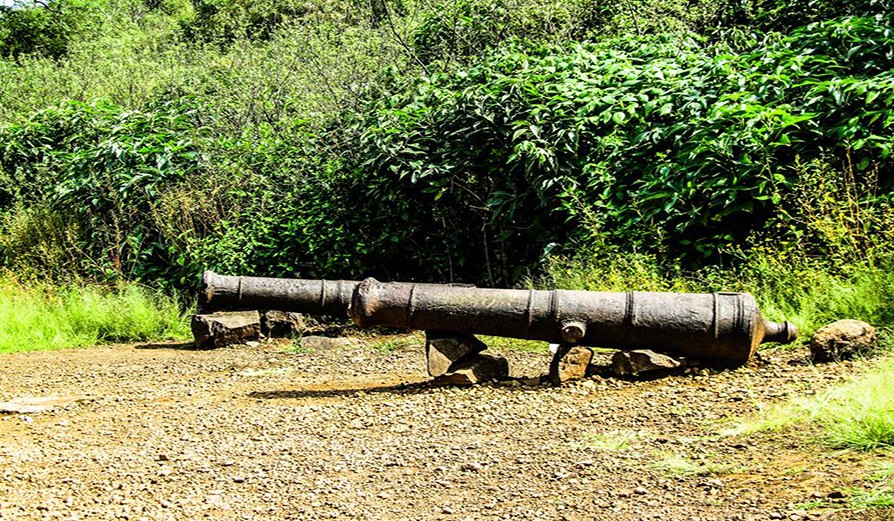
An old Canon at the fort belonging to the Marathas now lies idle
What to see at and from the fort:
Market Place
Holicha Mal
Hirkani Buruj
Tak Mak Tok Point
Jagdishwar Temple
Samadhi of Shivaji Maharaj
Throne of Shivaji Maharaj
Queen’s Palace
Meena Darwaza
Ropeway
and many more attractions.
Camping Info:
Raigad fort is ideal for camping as there is a lot of open space where trekkers can pitch their tents or alternatively stay in one of the hotels or resorts at the base or top of the fort.
Camping at Raigad Fort
How to reach:
On a daily basis, there are many S.T. buses plying from various locations in Mumbai and Thane for Raigad. A journey by bus will take you about 4 hours hence start early in the morning. Trekkers can also travel by private cars and cabs and can reach Raigad within 2 hours.
Caution: The roads and trails leading to the fort are quite slippery during Monsoon so be careful while venturing on a trek.For more information read: Precautions to be taken during Monsoon trekking.
Twin treks are forts that stand parallel to each other, most of the time also sharing the base village. With the monsoon here in full swing, this is an apt time to gear up for treks. Take off to picturesque locations, trek up quaint villages and enjoy a dose of history.
Trekking during this season gives you the dual opportunity to visit historic locations and capture nature at its vibrant best. It is also an excuse for capturing great memories.
Here are a few twin fort treks of medium difficulty, which you can plan this season.
Tung – Tikona
These are twin forts located on either sides of the Pawna Dam in Lonavala. They were watch towers used by rulers in ancient times.
Tung fort has an elevation of about 3527 feet. The fort is also known as Kathingad or the difficult fort. This conical fort has a temple of Tungi Devi at the summit. Though it is a steep climb, it isn’t a difficult one. It’s a combination of stone steps and muddy slopes.
Tikona Fort
Tikona is 3,500 feet high and is relatively easy trek. There are marked routes till you reach the ruins of the fort. At the summit, you can spot all the neighboring forts in the region, with a clear view of the trail you climbed up.
Sarasgad is a fort located near Pali in Paachapur and is 2,200 feet above sea level. This fort has steep stone-carved steps.
Sarasgad Fort
As you begin the ascent, it may seem tricky bit it isn’t as difficult. The climb is worthwhile – on your way to the summit there are caves that are reportedly said to be used by the Maratha army during ancient times. Locals call the fort Pagdicha Killa since its shape resembles a turban. There is a Shiva temple at the summit and a lake right behind it where you can relax.
Sudhagad Fort
The adjacent fort is Sudhagad, which is 2,030 feet above sea level. At the summit there is Bhoraidevi temple – a goddess revered by the locals. There are quite a few secret doors you will spot through this trek. A few patches are made easy with ladders and railings installed to avoid accidents.
For bookings for a Twin Trek to Sarasgad – Sudhagad Forts PLEASE CLICK HERE
Lohagad – Visapur
Lohagad, as compared to its twin is an easy trek. It is 3,389 feet above sea level and the aerial view resembles that of a scorpion’s tail.
Lohagad Fort
The trek begins from the base village of Malavli, but now there are roads made till Lohagad village making the trek shorter. Locals say these forts were used as prisons earlier. The fort has multiple levels of fortification, which are still intact.
Visapur Fort
Visapur (3,556 feet high) is another fort in Lonavala. The trek takes a different route from Lohagad village. The locals are very hospitable, so don’t hesitate to ask for directions. There are cisterns around the fort and after a long trek, sit down and enjoy the scenery. At the summit, you will be able to locate other forts like Tung, Tikona and Lohagad.
For bookings for a Twin Trek to Lohagad – Visapur Forts PLEASE CLICK HERE
Kalavantin Durg – Prabhalgad
This twin trek begins from Raigad district’s Prabal Machi, a plateau where trekkers usually stop to grab food before beginning the slightly lengthy trek. It’s from here that the two routes for the twin trek begin. Kalavantin Durg is a pinnacle and 2,300 (feet) above sea level.
Kalavantin Durg
There is a stairway that leads to the ruins of the fort. These winding steps are cut from rocks and during monsoon there is moss congregation.
Prabalgad Fort
The other route from Prabal Machi is the one that leads to Prabhalgad, which is more like a jungle trek. For newcomers, this is a confusing one. Hire a guide at the foothills. Stay the night at the village, there are accommodation facilities available.
For bookings for a Twin Trek to Kalavantin Durg – Prabhalgad PLEASE CLICK HERE
After experiencing a hot and humid summer; this year Mumbaikar’s are welcoming the monsoon with open arms. Monsoons the best time to visit some of the most beautiful locations near Mumbai that is home to breathtaking waterfalls, green hills and lakes.
So here are eight best lesser known places where you can enjoy a hot cup of tea and hot onion bhajis amidst lush greenery. Most importantly, they’re all located within 500 km from Mumbai.
Thosegar Waterfalls
Distance from Mumbai: 280 km
The beautiful Thosegar Waterfalls during Monsoon
Thosegar Waterfalls is a series of waterfalls located near the village of Thoseghar that ranges from 10 – 400 meters in height. The best time to visit these waterfalls is during the monsoon season, when there is heavier flow of water making the sight even grander than usual, amidst a plush green valley.Though the place can get slightly crowded during weekends, but it does offer a much needed respite to Mumbaikars from the busy city life.
To know more about Monsoon trips to Thosegar Waterfalls please click here
The Kaas Plateau covered in a bed of flowers during monsoon
Located near Satara, the Kaas Plateau is a World Heritage Site (UNESCO). The monsoon season is the best time to visit this plateau as the entire area is covered with over 800 different species of wild flowers. Every year during monsoon season, several varieties of flowers blossom, underneath an overcast sky making it a romantic place for couples visiting the plateau.
Kalsubai is the highest peak of the Sahyadri mountain range at 5400 feet above sea level. The place offers peaceful panoramas of rolling hills lost in the dense clouds and a view that’s worth a trek up this mountain. The place is dotted with many ancient temples and has many beautiful resorts and bungalows to stay in.
For those who like an activity – filled weekend, Panshet is the ideal location during monsoon which has range of adventure activities like kayaking, water skiing and water scooters. There are also several forts in the close vicinity that can be explored i.e. Raigad, Torna and Singhagad fort. Nature lovers can make a visit to Sinhagad National Park as well. There are very good facilities to camp out in the open at Panshet without any feeling of discomfort and can be enjoyed with the entire family.
Nashik makes for a heady destination during the monsoons as the entire region comes alive with its awesome waterfalls which every Mumbaikar must visit i.e. Dugarwadi waterfall, Vihigaon waterfall, Someshwar waterfall, Dabhosa waterfall. Nashik is also home to a number of wine yards, which in itself makes for a wonderful trip. There are several wine tours, wine therapies, and some excellent cuisines to enjoy. Above all don’t miss out on local Misal Pav during monsoons.
Igatpuri a little hill station on the outskirts of Mumbai has become popular by an academy that practices the old art of Vipassana meditation. Many Bollywood films have been shot on the locations here especially during the monsoon and winter seasons. Travelers can shop for chips and biscuits, which Igatpuri is well known for. Travelers can also head to the Camel Valley to view the stunning waterfalls. Igatpuri also serves as the base city that leads towards many forts and mountains for treks.
Umbrella falls formed under Wilson Dam at Bhandardara
Situated at the banks of the Pravara River, Bhandardara (@3000 feet above sea level) is a hill station that makes for an ideal destination for a weekend trek. Set on a dam, Bhandardara is known for its remote and idyllic location, waterfalls during monsoon season and boating in the lakes.
Bhandardara also serves as a base point for many treks within the area and is equally steeped in historical culture with a 1,000 year old temple dedicated to Shiva.Travelers must visit the Wilson Dam that was built in the year 1910 and also try catch a glimpse of the Randha falls during monsoon.
Bhimashankar is home to one of the 12 jyotirlinga shrines and a prominent pilgrimage centre situated in the western ghats of the Sahyadri hills. Besides being a pilgrimage center it is also has a biodiversity as it is home to the famous Bhimashakar Wildlife Reserve that houses a large variety of birds, animals and plants.Bhimashankar is also popular with hikers, trekkers and rock climbers and every year adventure enthusiasts from all over Maharashtra head to the Bhimashankar especially during monsoon to have their rush of adrenaline.
Every year monsoons brings an amazing natural beauty to the western ghats of Maharashtra.During this time the entire Sahaydri range turns into a trekkers paradise with some beautiful locations like green hills and valleys, lakes, waterfalls, and some adventurous cliffs to explore.
Monsoon trekking In Maharashtra
The Sahyadri, with their rugged topography, rocky mountains and pinnacles, historic hill forts, huge lakes and extensive forest region are a virtual paradise for trekking, climbing and camping. The Sahyadris provide a wide choice of outdoor and adventure to all lovers of outdoor life – the trekker, the climber and the nature lover.
Below are the other popular monsoon treks near Mumbai and Pune that will surely bring out the adventurer in you.
Rajgad Fort Trek
Rajgad means ‘The King of Forts’, and is considered as one of the most important forts in Maharashtra as far as the cultural heritage of the state is concerned. The Rajgad fort has an interesting history and was home to Shivaji for over 25 years till he became the Chhatrapati.
Rajgad Fort during monsoon
Rajgad is amongst the most popular trekking destinations near Pune. The majestic fort , offers a panoramic view of the surroundings and the best time to visit the Rajgad fort is just after monsoons, however one would find trekkers at Rajgad fort on weekends all throughout the year.There are 3 ways to reach the top of the fort Via Pali Route, Via Gunjawane Route and Via Bhor Route.
The fort of Shivneri, is one of the historically important forts of Maharashtra, as it was the birth place of Shivaji Maharaj, who spent the major part of his childhood here. There is a temple of goddess Shivai in the close vicinity of the fort, and Shivaji was named after this goddess.
Trekking Shivneri fort is fairly easy, and there are 2 options for trekkers, one is to trek all the way to the top from the base village, and second take the motor able road half way to the top and start the trek from there. After that there is a series of stairs (400 steps) that lead to the top.
Pratapgad fort was built by Shivaji Maharaj, during mid 16th century, in order to defend the banks of Nira and Koyna River, as they were major trade route during that time. But the real reason for the forts popularity was for its famous tussle between Afzal Khan and Shivaji Maharaj, in which Afzal Khan lost his life.
A view of the Pratapgad Fort during Monsoon
Pratapgad fort is not very popular with experienced trekkers but is ideal for first time trekkers who want to get used to trekking forts. There is no specific trekking trail between the woods instead there is a series of 450 plus steps from the base of the fort to the top.Once trekkers reach the top they fill find well preserved fortifications, historic monuments and 360 degree panoramic views of the valley.
The Ratangad fort is believed to be about 2000 years old. It was initially having a number of naturally formed caves, but gradually over the centuries, its inhabitants built the fort around the natural rock structures. The fort has a rock peak, with a cavity in it at the top, which is called ‘Nedhe’ or ‘Eye of the Needle’.
A view of the Ratangad Fort from the base village
The Ratangad fort trek is a fairly simple trek, which passes through small fields and thick forests by the Pravara River. The trek is divided into 3 stages; each stage is separated by small plateaus.
The Harishchandragad fort is an ancient fort, with its origins dating back to the 6th century. The caves situated at the fort have ancient temples and carvings of deities, which suggest that the fort belongs to the medieval period. Harishchandragad is a beautiful hill fort, and a popular trekking destination. The trek here is difficult, and long and is not recommended in summers. The best season for Harishchandragad trek is just after monsoons and winters.
There are 3 trekking routes to the fort. One via Khireshwar village, via Nalichi Vaat(This is extremely difficult), via Pachnai village(This is the easiest route).The Khireshwar village route is one of the most preferred routes as it offers scenic views while trekking, but this route is a bit time consuming.
For detailed information on Harishchandragad Fort Trek PLEASE CLICK HERE
Vasota Fort Trek
According to historians, the Vasota fort was under the Maratha rule, during the 16th century. It was named Vyaghragad(meaning tiger) by Shivaji Maharaj, because of its defensive capability. Later it was in control of the Peshwas (Bajirao Peshwe), only to fall in the hands of the British empire during the 18th century, who bombarded the fort
and destroyed many structures within the fort.
Vasota Fort
To reach the base of the fort one has to take a boat ride. There are 2 forts here i.e. old and new, the old Vasota is inaccessible and trekking is carried out only at the new Vasota fort. This is a dream trek for every trekker as it offers a thrilling experience of walking through a dense forest full of wild animals and an opportunity to get close to
nature.
Kalsubai, according to local legend, was the name of a tormented daughter-in-law, who ran away to the top of a hill to escape harassment from her in-laws. She is believed to have disappeared here, and the locals built a temple in her memory on the peak’s summit. The hill is named Kalsubai after her.
Kalsubai Trek
Kalsubai is the highest peak in Maharashtra, and is one of the most enjoyable treks. The route to the top is well marked, and many trekkers and pilgrims visit to reach the peak, which has a small temple of Kalsubai. During monsoon the peak is like being in heaven, and is covered with fog and has strong winds blowing. But the best time to visit is during September, just after monsoon, when there are thousands of wild flowers blooming everywhere and the climate is just perfect for a trek.
There are several forts named Jaigad in Maharashtra. Jungli Jaigad is one of the forts of Jaigad that is surrounded by thick vegetation hence earning its name.
Jungli Jaigad Fort
Jangli Jaigad is one of the most interesting jungle treks, where trekkers will get a chance to see a real dense forest. This forest is part of Koyna Wildlife Sanctuary, which is now part of Sahyadri Tiger Reserve. If lucky trekkers will be able to some wild animals and rare birds during the trek.
Caution: The roads and trails leading to the fort are quite slippery during Monsoon so be careful while venturing on a trek.For more information read: Precautions to be taken during Monsoon trekking.
The city of Pune is very popular for its rich culture and heritage and was once the capital of the powerful Maratha Empire.There are several forts near Pune city that attract trekkers and hikers all round the year, who get a chance to relive the history of the powerful Marathas and Peshwas and at the same time get a chance to absorb the wonderful natural environment while they trek.
Trekking during monsoon has a special charm which no other season can provide and even an ordinary walk around the hill is a pleasure during the rainy season.
So If you have not experienced trekking and hiking in the monsoon it is then time to grab your backpack, fill them with the essentials and head towards the below mentioned monsoon trekking and hiking destinations near Pune.
Purandar Fort Trek
The Purandar fort was built, during the 13th century by the Persian invaders. The fort witnessed many tussles between the Marathas and the Mughals over its possession only to later fall in the hands of the British.
The massive gateway of Purandar Fort
Trekking at the Purandar fort can be done at 2 levels. The first level begins at the base of the hill and is locally known as a ‘Full Trek’ which takes about 2 hours to reach to the top. While the second level starts at a midway to the fort and is known as ‘Half Trek’ as the road till this section is motor able hence many first timers prefer this trek as it take about 45 minutes from here to the top.
The Raireshwar fort is considered as one of the most historical places in Maharashtra, as it was here, that Shivaji Maharaj had taken oath of Swaraajya, at the temple of Raireshwar at the fort.
Raireshwar Fort
The trek is fairly easy, as the path up to the Raireshwar fort is clearly marked, and the trail is surrounded by picturesque landscapes and hills, the entire beauty of nature is worth admiring and experiencing.
The origins of the fort are fairly unknown but according to recent history the Korigad fort was incorporated into the Kingdom of Chhatrapati Shivaji along with other neighboring forts of Lohagad, Visapur, Tikona and Tung.
Koraigad Fort
The trek is fairly easy and one can reach the top after climbing a series of 510 steps. Once at the summit the fort has water reservoirs, temples dedicated to various deities. The walls of the fort are still intact and trekkers can easily walk along its entire perimeter for about 2 km and enjoy breathtaking views of the landscape surrounding the fort.
Torna Fort also known as Prachandagad is one of the highest forts in Pune district located at a height 4610 feet. It was captured by Shivaji Maharaj at a tender age of 16.
Torna Fort
Trekking the Torna fort is a fascinating experience both during monsoons and winters as it keeps a trekker encapsulated for the entire duration of the trek with its beauty.While trekking up the fort, trekkers will come across a series of temples, old ruins which were once used to accommodate soldiers, water reservoirs and tanks. Once at the summit trekkers will be rewarded with breathtaking views of neighboring forts, beautiful landscapes and mountain ranges.
The Visapur fort was originally built by Bahmani rulers and with the passage of time it went into the hands of the Mughals and the Marathas who were in constant conflict with each other over its possession.
Visapur Fort
The Visapur Fort trek is a one day trek accessible from both Mumbai and Pune. It shares a common ground with the trail to Lohgad Fort. Visapur fort trek is a bit of confusion as the fort looks intimidating from below and there are huge boulders and rocky paths all the way up to the fort. Furthermore, the trail isn’t marked properly, which makes it even more difficult to find an entry into the fortified plateau. So, the Visapur trek is for those gutsy trekkers, who won’t fret about getting lost and enjoy every moment of the experience.
Sinhgad means ‘The Lion’s Fort’. Previously the fort was known as Kondana fort and has witnessed numerous battles in its long history, but the most notable battle was when the fort was recaptured by the brave Maratha warrior Tanaji Malusare on behalf of Shivaji Maharaj.
The Sinhagad Fort
Trekking at Sinhagad fort can be done anytime of the year, the best time is to start early in the morning especially if you are trekking during winters and summer season. During monsoons trekking at Sinhagad is a pleasant experience as there are light showers and cool breeze blowing throughout the day.The trek is very easy as compared to other fort treks near Pune and is enjoyable as one climbs the views only get amazing with beautiful landscapes laden with wild flowers all around .
So ditch the comfort of your home this monsoon and instead step outside to soak in the majestic grandeur of Mother Nature.
Caution: The roads and trails leading to the fort are quite slippery during Monsoon so be careful while venturing on a trek.For more information read: Precautions to be taken during Monsoon trekking.
The monsoon season has arrived and its now time for adventure enthusiast to have some real fun in the rains in the midst of nature.Situated in the western ghats of Maharashtra are the Sahyadri mountain ranges that are full of trekking locations and ancient forts built by famous kings of the bygone era. During monsoon these destinations provide adventure enthusiast with a number of opportunities like trekking, rock climbing, rappelling and camping.
Monsoon is the right time for trekkers to discover new locations, enjoy new adventures and have some fun in the midst of waterfalls and streams on a trekking trail and at the end, treat themselves to piping hot Khanda Bhajyas, Vada Pav and a Special Cutting Chai.
Here are the best monsoon treks to try out near Mumbai.
Raigad Fort Trek
The Raigad fort was built by Shivaji Maharaj, and was made his capital in the year 1674, when he was crowned King of the Maratha Empire.
A birds eye view of the Raigad Fort
In present times, the Raigad Fort is known for its immense beauty and waterfalls, and remains a paradise for trekkers, hikers and campers from Mumbai and Pune. This fort is strategically perched atop a wedge-shaped block of hill, split off from the Western Ghats and is inaccessible from three sides. The fort rises at 2700 feet above sea level and is located in the Sahyadri mountain range and trekking here is a great experience.
The Prabalgad Fort is situated between Panvel and Matheran at a height of 2300 feet in the Western Ghats. It was built on a rocky plateau and was known as Muranajan during the rule of the Bahmani Sultanate, but was renamed by the Marathas under the rule of Shivaji.
A view of the Prabalgad fort from the base village
The trek begins at the base village of Thakurwadi, initially it is an easy trek, but as it progresses, it does have a few difficult climbs and can be attempted by beginners.Once at the summit you will find a huge plateau without any fort structure, but being here is an awesome feeling as you are now at the peak in the middle of a jungle.
The origins of the fort can be traced to the 2nd – century when it was originally called as ‘Bhorapgad’. According to historical records, during the early part of the 15th century the fort was captured by the Bahamani Sultan and later in the 16th – century it was captured by the Marathas and named ‘Sudhagad’ which means Sweet One in Marathi.
The majestic Sudhagad Fort
The Sudhagad fort is one of the most beautiful forts in the Sahyadri ranges and is mostly visited by trekkers for a one day trek as it has a very easy endurance level.Sudhagad is an amazing place to trek during the monsoon and seems like a stairway to heaven.The fort is surrounded by lush greenery and the weather is just beautiful.
The creator of this fort is unknown, but the fort, traces its origins to the 15th century and has been ruled by several rulers, the prominent ones being the Marathas and the Mughals.
A view of the Mahuli Fort
The Mahuli Mountain is the highest in the Thane district and is famous for its pinnacles. The trek covers 3 hills and every year experienced trekkers and rock climbers plan their expedition here.Monsoon and winter are ideal for trekking and rock climbing at Mahuli, but this trek is not advisable for beginners as the trek has several steep climbs and above all it’s a long trek that takes about 3 hours to reach the top.
Rajmachi fort was first established by the Satavahanas. In recent history, the fort was in control of the Marathas under the leadership of Shivaji Maharaj,and served as a strategic fort to control the historical trade routes.
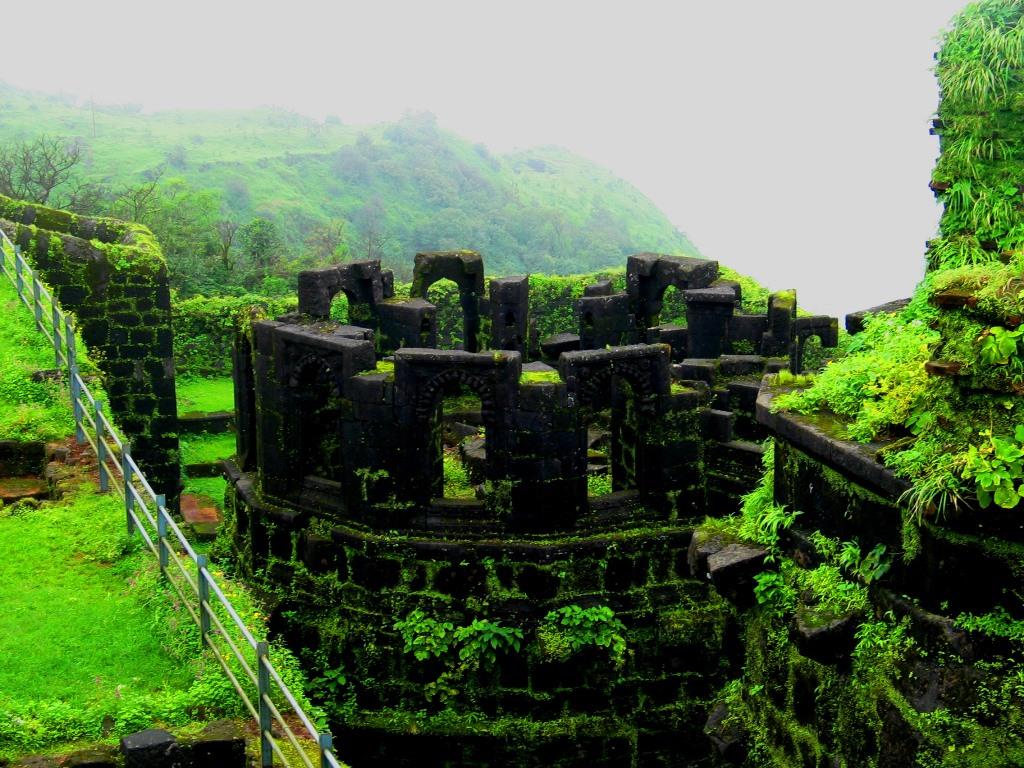
Rajmachi Fort during monsoon
Located in the Sahyadri mountain ranges, near the twin hill stations of Lonavala and Khandala is the beautiful Rajmachi fort.The Rajmachi peak offers breathtaking views of the valley and has 2 fortified structures i.e. Shrivardhan fort and Manaranjan fort. The fort offers one of the most beautiful treks near Mumbai.
Nicknamed as ‘The Iron Fort’, it was built and extensively used by Chhatrapati Shivaji Maharaj. Today, it is one of the favorite destinations for trekkers especially during monsoon season and every year it attracts trekkers and tourist from Mumbai and Pune.
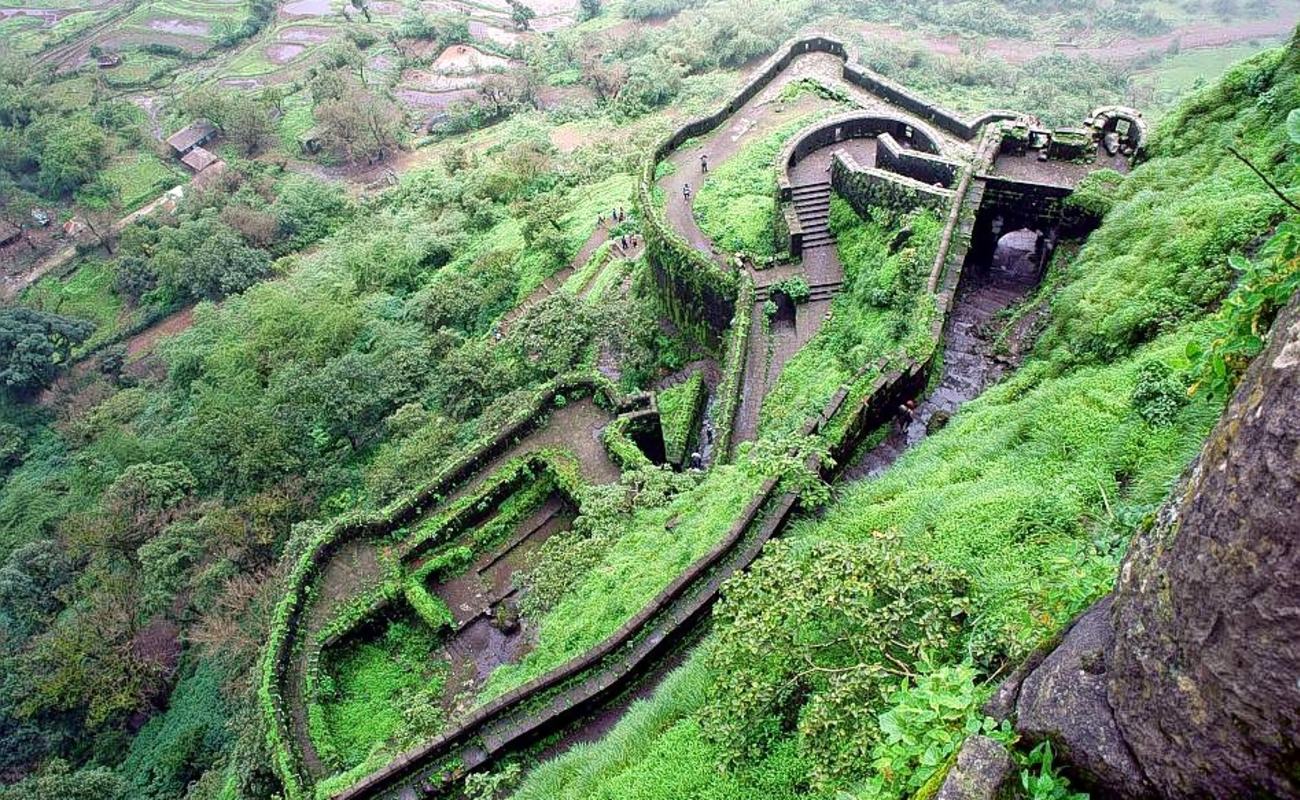
A birds eye view of Lohagad Fort
Usually seen as a beginners trek, the fort is a perfect blend of history and adventure. During monsoon the top of the fort is covered with mist and clouds. The surrounding hills are covered in shades of green making it a sight to behold.The fort is easily accessible as there are only steps and less amount of trekking required.
So get ready for an amazing trek near Mumbai this monsoon as the weather plays a perfect host and will help you witness some of the most majestic forts on the Sahyadri mountain ranges.
Caution: The roads and trails leading to the fort are quite slippery during Monsoon so be careful while venturing on a trek.For more information read: Precautions to be taken during Monsoon trekking.