Location: Mahad, Raigad District Distance from Mumbai: 170 km Distance from Pune: 150 km Trekking Duration: 1 day. Trek Length: 1 hour 30 minutes. Starting Point: Pachad village is the base village Best Season to Visit: All round the year. Difficulty Level: Easy to Medium. Height: 820 mt (2700 feet) above sea level.
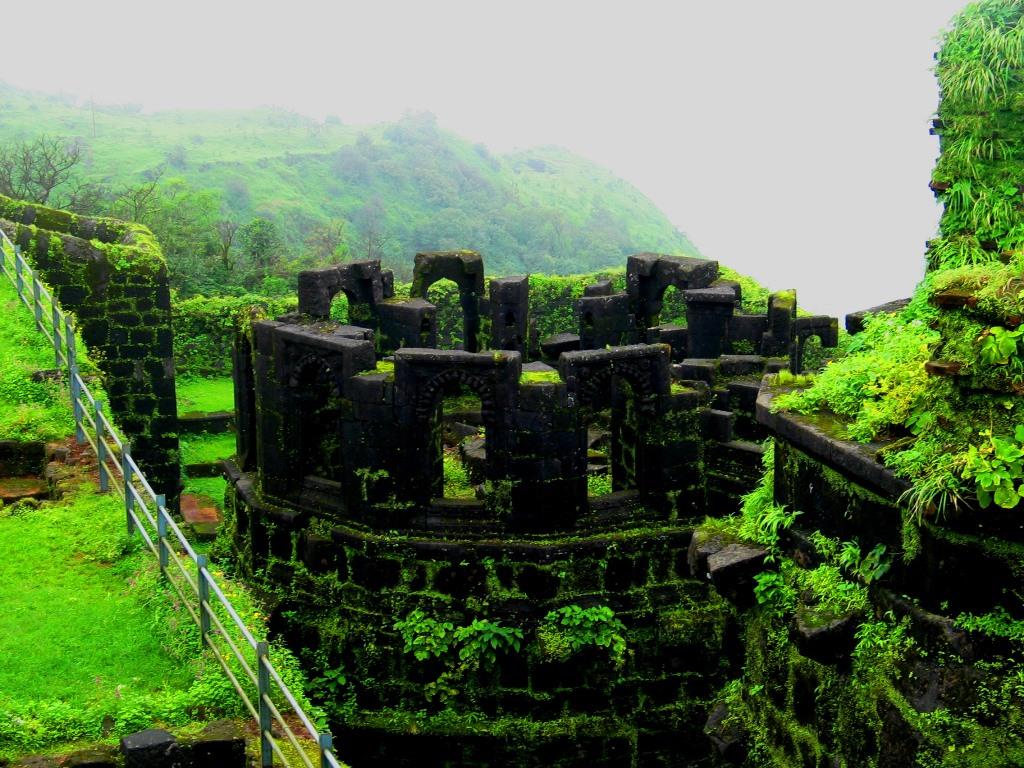
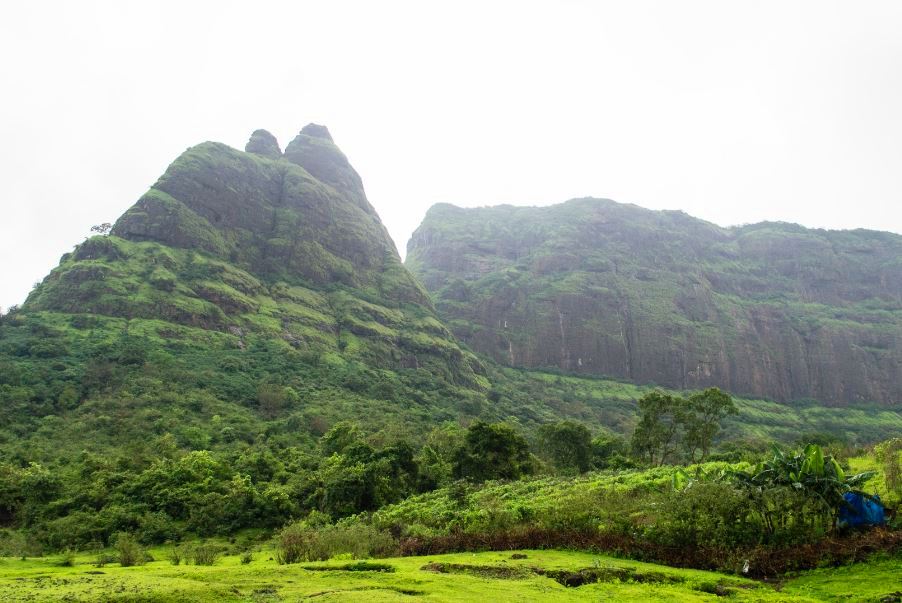
A green cover during the monsoon season
A brief history:
The Raigad fort was built by Shivaji Maharaj and was made his capital in the year 1674 when he was crowned King of the Maratha Empire. Since then the fort had an interesting history and many legends associated with it. Later during the 18th century the British laid siege and destroyed the Fort.
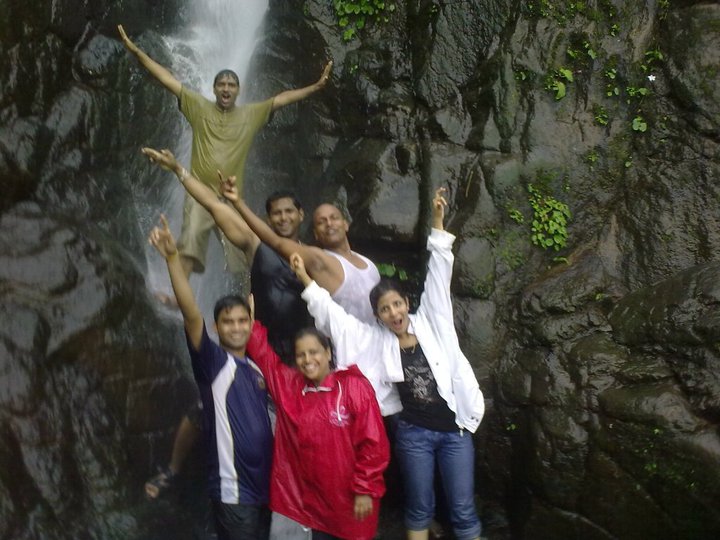
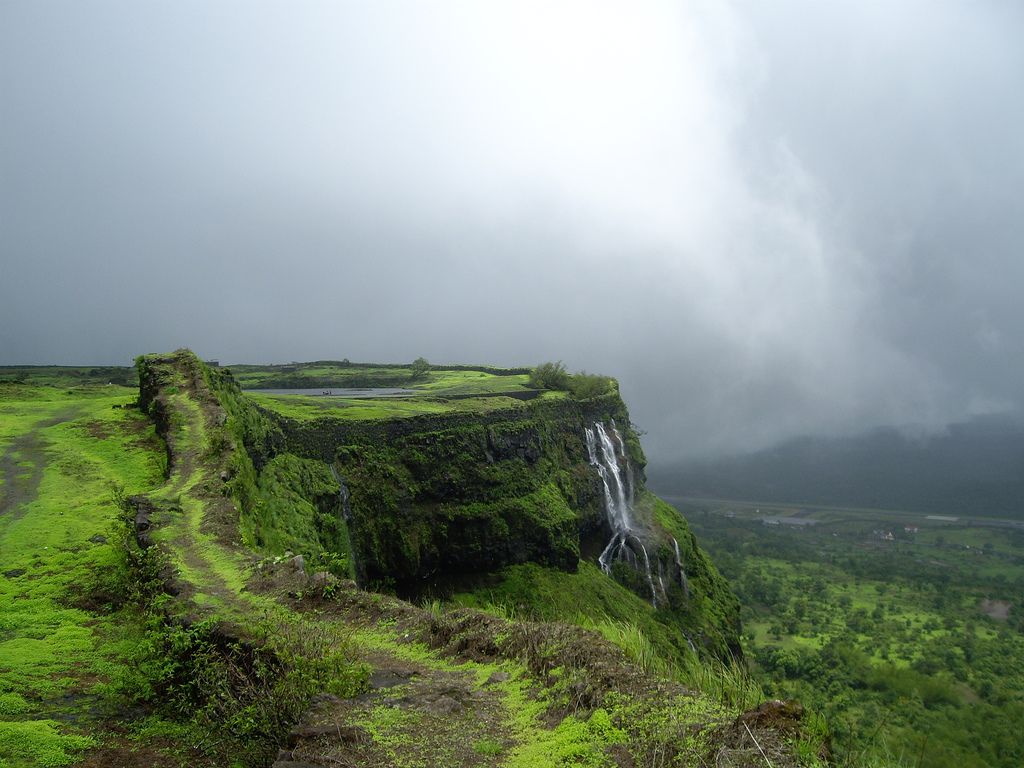
Trekkers enjoy themselves at a waterfall as they trek the Raigad Fort.
In present times, the Raigad Fort is known for its immense beauty and waterfalls and remains a paradise for trekkers, hikers and campers from Mumbai and Pune. This fort is strategically perched atop a wedge-shaped block of hill, split off from the Western Ghats and is inaccessible from three sides.
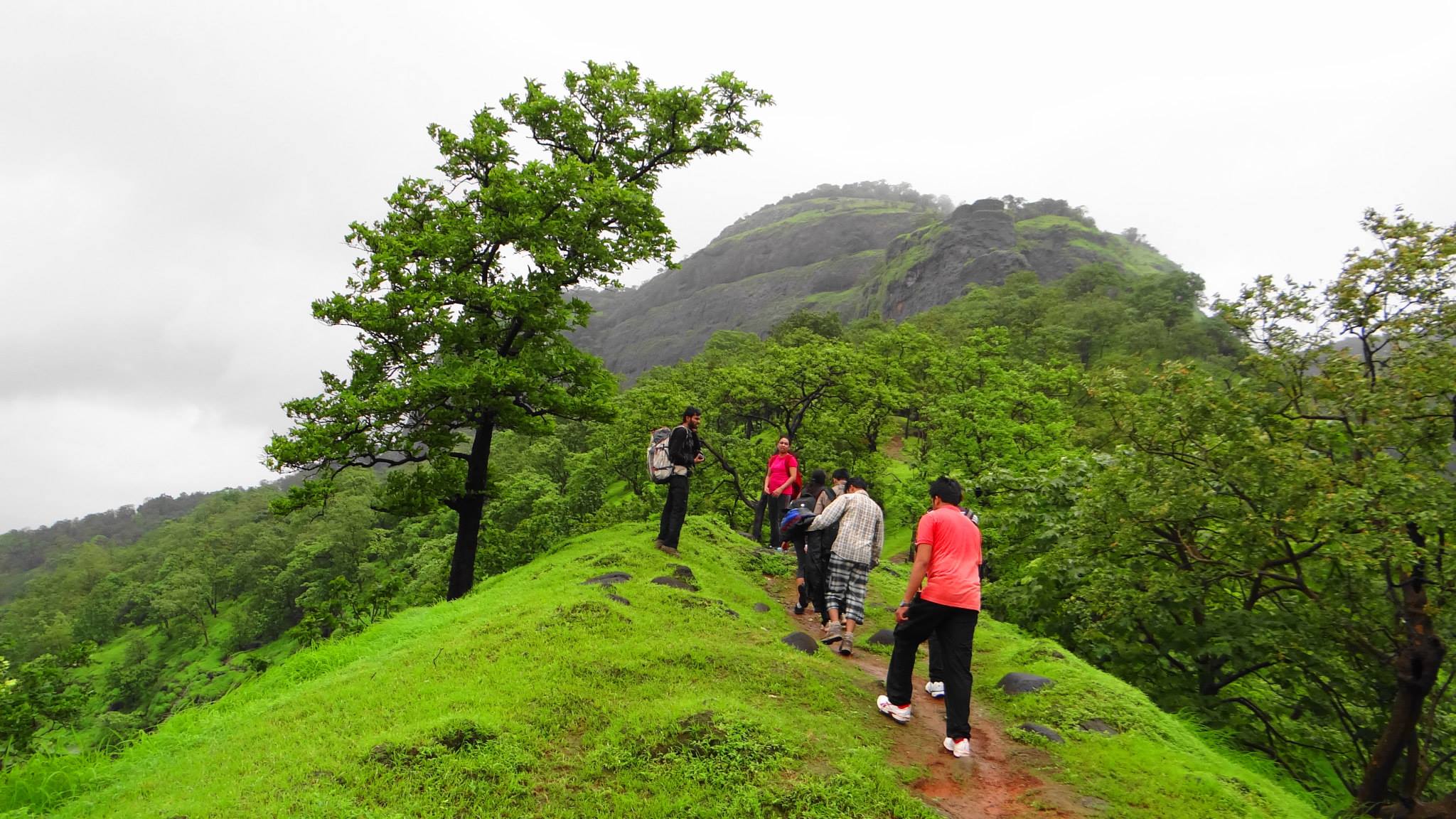
Trekkers make their way to the summit.
The fort rises at 2700 feet above sea level and is located in the Sahyadri mountain range and trekking here is a great experience. There are a series of 1750 steps that will take you to the top of the fort.
Steps leading to the Raigad fort
A trek here is completely safe and many trekkers even opt for a night trek which is a great experience. While trekking at Raigad trekkers need not worry about food and water as it is easily available at the many shops at the base and the top of the fort.
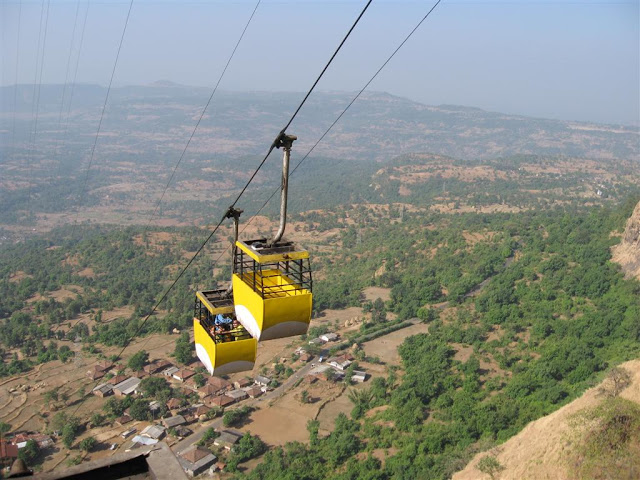
The Rope way leading to the top of Raigad Fort
For tourists who are with family and children and are not interested in trekking they can opt for the ropeway which will take them directly to the top of the fort within 5 minutes.
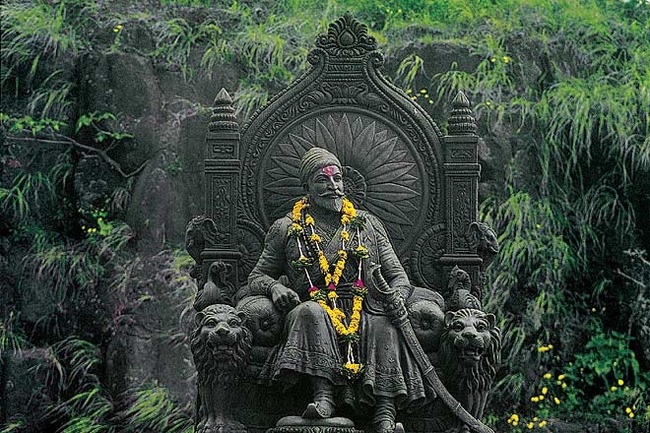
Chhatrapati Shivaji Maharaj statue in Raigad fort.
Note:
Trekkers should be aware that Raigad Fort is much more than a tourist attraction and is considered a holy place by locals and many others from different parts of Maharashtra since it is home to the Samadhi of Shivaji Maharaj hence trekkers are advised to be sensitive to the emotions attached to this fort.
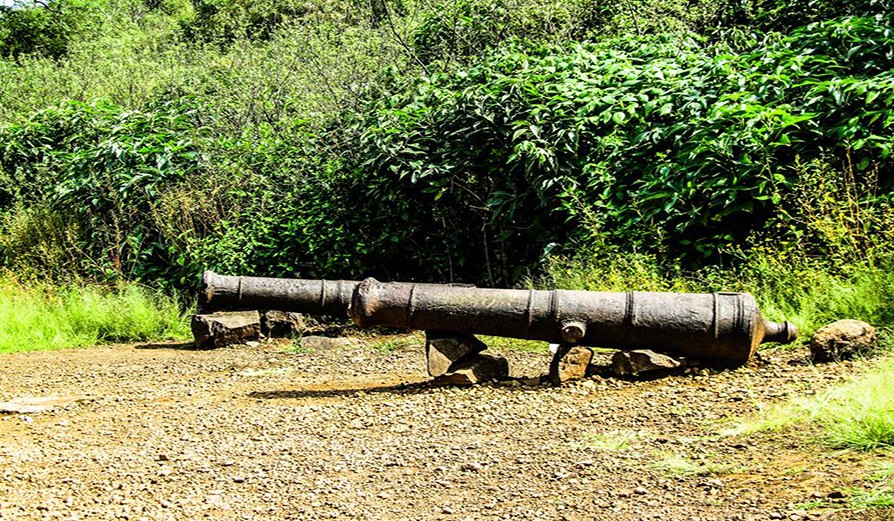
An old Canon at the fort belonging to the Marathas now lies idle
What to see at and from the fort:
Market Place
Holicha Mal
Hirkani Buruj
Tak Mak Tok Point
Jagdishwar Temple
Samadhi of Shivaji Maharaj
Throne of Shivaji Maharaj
Queen’s Palace
Meena Darwaza
Ropeway
and many more attractions.
Camping Info:
Raigad fort is ideal for camping as there is a lot of open space where trekkers can pitch their tents or alternatively stay in one of the hotels or resorts at the base or top of the fort.
Camping at Raigad Fort
How to reach:
On a daily basis, there are many S.T. buses plying from various locations in Mumbai and Thane for Raigad. A journey by bus will take you about 4 hours hence start early in the morning. Trekkers can also travel by private cars and cabs and can reach Raigad within 2 hours.
Caution: The roads and trails leading to the fort are quite slippery during Monsoon so be careful while venturing on a trek.For more information read: Precautions to be taken during Monsoon trekking.
The city of Pune is very popular for its rich culture and heritage and was once the capital of the powerful Maratha Empire.There are several forts near Pune city that attract trekkers and hikers all round the year, who get a chance to relive the history of the powerful Marathas and Peshwas and at the same time get a chance to absorb the wonderful natural environment while they trek.
Trekking during monsoon has a special charm which no other season can provide and even an ordinary walk around the hill is a pleasure during the rainy season.
So If you have not experienced trekking and hiking in the monsoon it is then time to grab your backpack, fill them with the essentials and head towards the below mentioned monsoon trekking and hiking destinations near Pune.
Purandar Fort Trek
The Purandar fort was built, during the 13th century by the Persian invaders. The fort witnessed many tussles between the Marathas and the Mughals over its possession only to later fall in the hands of the British.
The massive gateway of Purandar Fort
Trekking at the Purandar fort can be done at 2 levels. The first level begins at the base of the hill and is locally known as a ‘Full Trek’ which takes about 2 hours to reach to the top. While the second level starts at a midway to the fort and is known as ‘Half Trek’ as the road till this section is motor able hence many first timers prefer this trek as it take about 45 minutes from here to the top.
The Raireshwar fort is considered as one of the most historical places in Maharashtra, as it was here, that Shivaji Maharaj had taken oath of Swaraajya, at the temple of Raireshwar at the fort.
Raireshwar Fort
The trek is fairly easy, as the path up to the Raireshwar fort is clearly marked, and the trail is surrounded by picturesque landscapes and hills, the entire beauty of nature is worth admiring and experiencing.
The origins of the fort are fairly unknown but according to recent history the Korigad fort was incorporated into the Kingdom of Chhatrapati Shivaji along with other neighboring forts of Lohagad, Visapur, Tikona and Tung.
Koraigad Fort
The trek is fairly easy and one can reach the top after climbing a series of 510 steps. Once at the summit the fort has water reservoirs, temples dedicated to various deities. The walls of the fort are still intact and trekkers can easily walk along its entire perimeter for about 2 km and enjoy breathtaking views of the landscape surrounding the fort.
Torna Fort also known as Prachandagad is one of the highest forts in Pune district located at a height 4610 feet. It was captured by Shivaji Maharaj at a tender age of 16.
Torna Fort
Trekking the Torna fort is a fascinating experience both during monsoons and winters as it keeps a trekker encapsulated for the entire duration of the trek with its beauty.While trekking up the fort, trekkers will come across a series of temples, old ruins which were once used to accommodate soldiers, water reservoirs and tanks. Once at the summit trekkers will be rewarded with breathtaking views of neighboring forts, beautiful landscapes and mountain ranges.
The Visapur fort was originally built by Bahmani rulers and with the passage of time it went into the hands of the Mughals and the Marathas who were in constant conflict with each other over its possession.
Visapur Fort
The Visapur Fort trek is a one day trek accessible from both Mumbai and Pune. It shares a common ground with the trail to Lohgad Fort. Visapur fort trek is a bit of confusion as the fort looks intimidating from below and there are huge boulders and rocky paths all the way up to the fort. Furthermore, the trail isn’t marked properly, which makes it even more difficult to find an entry into the fortified plateau. So, the Visapur trek is for those gutsy trekkers, who won’t fret about getting lost and enjoy every moment of the experience.
Sinhgad means ‘The Lion’s Fort’. Previously the fort was known as Kondana fort and has witnessed numerous battles in its long history, but the most notable battle was when the fort was recaptured by the brave Maratha warrior Tanaji Malusare on behalf of Shivaji Maharaj.
The Sinhagad Fort
Trekking at Sinhagad fort can be done anytime of the year, the best time is to start early in the morning especially if you are trekking during winters and summer season. During monsoons trekking at Sinhagad is a pleasant experience as there are light showers and cool breeze blowing throughout the day.The trek is very easy as compared to other fort treks near Pune and is enjoyable as one climbs the views only get amazing with beautiful landscapes laden with wild flowers all around .
So ditch the comfort of your home this monsoon and instead step outside to soak in the majestic grandeur of Mother Nature.
Caution: The roads and trails leading to the fort are quite slippery during Monsoon so be careful while venturing on a trek.For more information read: Precautions to be taken during Monsoon trekking.
The monsoon season has arrived and its now time for adventure enthusiast to have some real fun in the rains in the midst of nature.Situated in the western ghats of Maharashtra are the Sahyadri mountain ranges that are full of trekking locations and ancient forts built by famous kings of the bygone era. During monsoon these destinations provide adventure enthusiast with a number of opportunities like trekking, rock climbing, rappelling and camping.
Monsoon is the right time for trekkers to discover new locations, enjoy new adventures and have some fun in the midst of waterfalls and streams on a trekking trail and at the end, treat themselves to piping hot Khanda Bhajyas, Vada Pav and a Special Cutting Chai.
Here are the best monsoon treks to try out near Mumbai.
Raigad Fort Trek
The Raigad fort was built by Shivaji Maharaj, and was made his capital in the year 1674, when he was crowned King of the Maratha Empire.
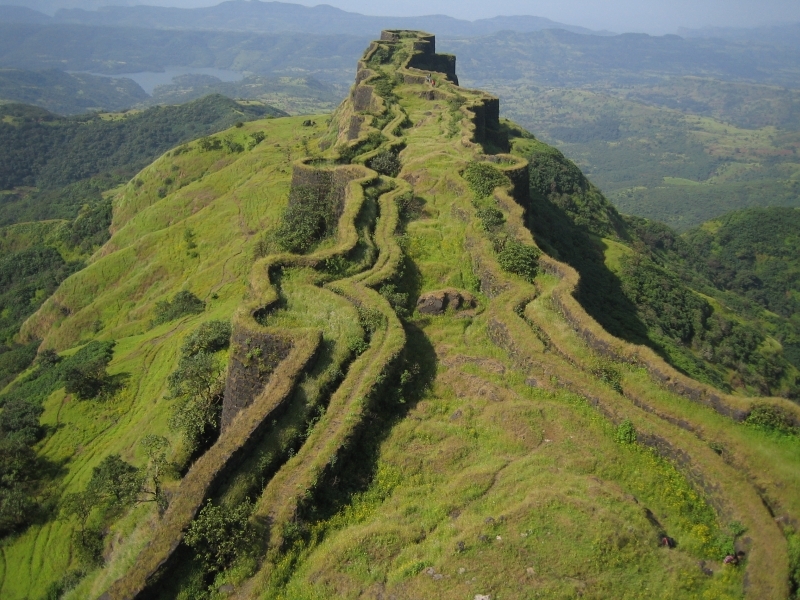
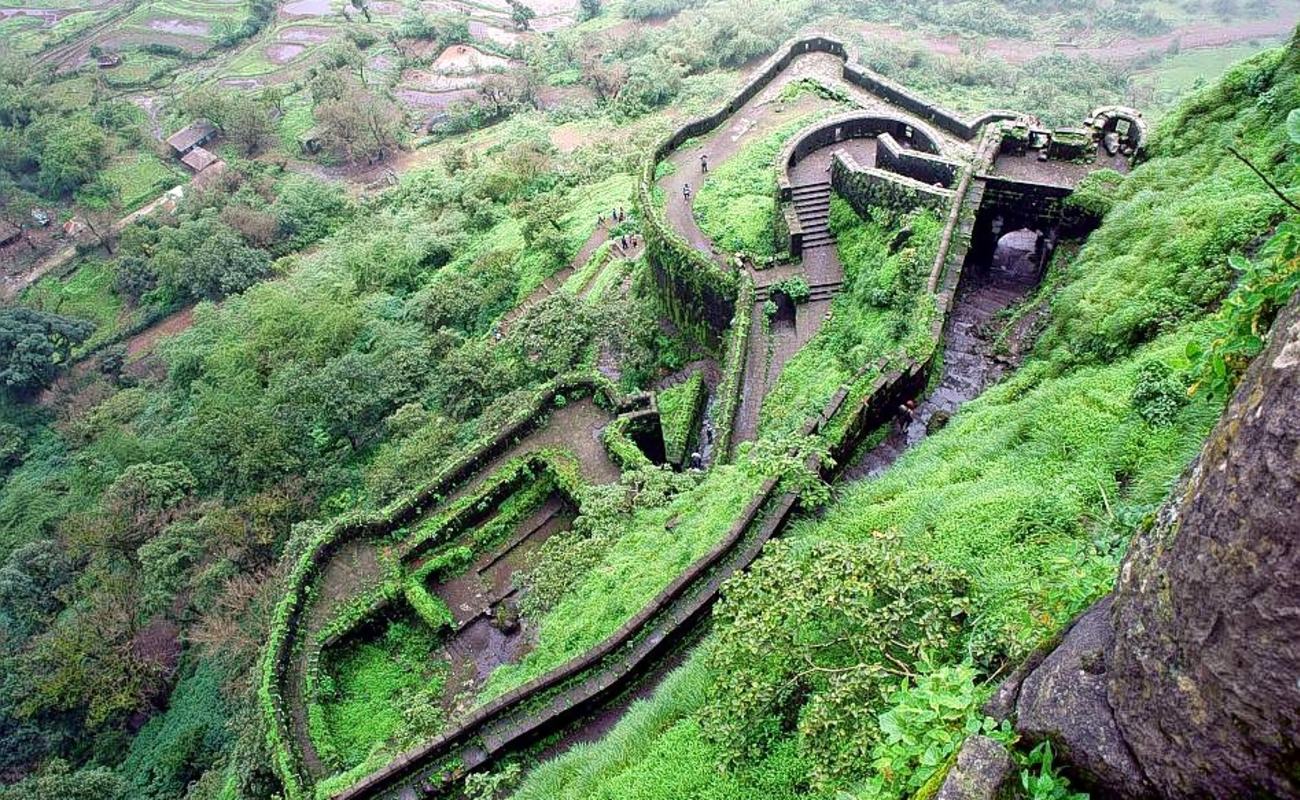
A birds eye view of the Raigad Fort
In present times, the Raigad Fort is known for its immense beauty and waterfalls, and remains a paradise for trekkers, hikers and campers from Mumbai and Pune. This fort is strategically perched atop a wedge-shaped block of hill, split off from the Western Ghats and is inaccessible from three sides. The fort rises at 2700 feet above sea level and is located in the Sahyadri mountain range and trekking here is a great experience.
The Prabalgad Fort is situated between Panvel and Matheran at a height of 2300 feet in the Western Ghats. It was built on a rocky plateau and was known as Muranajan during the rule of the Bahmani Sultanate, but was renamed by the Marathas under the rule of Shivaji.
A view of the Prabalgad fort from the base village
The trek begins at the base village of Thakurwadi, initially it is an easy trek, but as it progresses, it does have a few difficult climbs and can be attempted by beginners.Once at the summit you will find a huge plateau without any fort structure, but being here is an awesome feeling as you are now at the peak in the middle of a jungle.
The origins of the fort can be traced to the 2nd – century when it was originally called as ‘Bhorapgad’. According to historical records, during the early part of the 15th century the fort was captured by the Bahamani Sultan and later in the 16th – century it was captured by the Marathas and named ‘Sudhagad’ which means Sweet One in Marathi.
The majestic Sudhagad Fort
The Sudhagad fort is one of the most beautiful forts in the Sahyadri ranges and is mostly visited by trekkers for a one day trek as it has a very easy endurance level.Sudhagad is an amazing place to trek during the monsoon and seems like a stairway to heaven.The fort is surrounded by lush greenery and the weather is just beautiful.
The creator of this fort is unknown, but the fort, traces its origins to the 15th century and has been ruled by several rulers, the prominent ones being the Marathas and the Mughals.
A view of the Mahuli Fort
The Mahuli Mountain is the highest in the Thane district and is famous for its pinnacles. The trek covers 3 hills and every year experienced trekkers and rock climbers plan their expedition here.Monsoon and winter are ideal for trekking and rock climbing at Mahuli, but this trek is not advisable for beginners as the trek has several steep climbs and above all it’s a long trek that takes about 3 hours to reach the top.
Rajmachi fort was first established by the Satavahanas. In recent history, the fort was in control of the Marathas under the leadership of Shivaji Maharaj,and served as a strategic fort to control the historical trade routes.
Rajmachi Fort during monsoon
Located in the Sahyadri mountain ranges, near the twin hill stations of Lonavala and Khandala is the beautiful Rajmachi fort.The Rajmachi peak offers breathtaking views of the valley and has 2 fortified structures i.e. Shrivardhan fort and Manaranjan fort. The fort offers one of the most beautiful treks near Mumbai.
Nicknamed as ‘The Iron Fort’, it was built and extensively used by Chhatrapati Shivaji Maharaj. Today, it is one of the favorite destinations for trekkers especially during monsoon season and every year it attracts trekkers and tourist from Mumbai and Pune.
A birds eye view of Lohagad Fort
Usually seen as a beginners trek, the fort is a perfect blend of history and adventure. During monsoon the top of the fort is covered with mist and clouds. The surrounding hills are covered in shades of green making it a sight to behold.The fort is easily accessible as there are only steps and less amount of trekking required.
So get ready for an amazing trek near Mumbai this monsoon as the weather plays a perfect host and will help you witness some of the most majestic forts on the Sahyadri mountain ranges.
Caution: The roads and trails leading to the fort are quite slippery during Monsoon so be careful while venturing on a trek.For more information read: Precautions to be taken during Monsoon trekking.
As monsoon sets in, it is time for nature to drape itself in its very best garb. A green cover is formed on every inch of the hills, mountains and surrounding landscape. While the waterfall’s drench every side of the mountains and plains which had been left high and dry due to the hot summer months.
As the month of July sets in the monsoon’s gains pace and it is now time for the Mumbaikars and Punekars to bring out their trekking gear. The state of Maharashtra is blessed with many beautiful hill stations and is also home to the mighty Sahyadri ranges which offer some great monsoon trekking options especially around Mumbai and
Pune.
While monsoon trekking can always be fun and exciting at the same time it can get a little risky especially for beginners and children.So if you and your buddies have planned a monsoon trek here is some useful information and safety tips, which will come handy and will keep you prepared in case of a disaster.
Remember the saying “Better safe than sorry”.
Important points to remember
Choose the best time to trek :
Before embarking on a trek always understand the weather conditions for the day. Ideally begin the trek by early morning and rest during afternoon.
Trekkers leave for a trek early in the morning.
During monsoon a day’s trek is safe and ideal rather than an overnight trek, especially if you are a beginner or trekking with your family and children.
Ideally embark on a trek after a heavy shower as trekking during the heavy rains make the trekking path murky and difficult to climb. Furthermore, if there are waterfalls or streams along the trail the heavy shower will make it difficult to gauge the pressure and volume of the water thereby making your trek completely unsafe.
Avoid trekking alone and hire a local guide
It is strongly recommended that you trek with a minimum of 5 people. Trekking during the monsoon should never be taken lightly as accidents can happen to even the most experienced trekkers.
Avoid trekking alone.
If you have never trekked before and are planning to experience one, then it is always advisable to have an expert come along or a local guide to join your trip. Trekking along an unexplored trail may sound exciting and adventurous, but a bad experience may leave you traumatized for life. Hence always stick to explored, well known trails along with a guide and a big group.
Always trek in a large group
Furthermore a local guide knows the in’s and out’s of a trail well and can easily guide trekkers out to safety and take charge of an emergency situation if at all once arises.Finally always follow the instructions of the guide or group leaders leading the trek as one wrong step can put you in a dangerous situation.
Understand the difficulty levels
Treks can be divided into 3 categories i.e. easy, moderate and difficult. But during monsoon even an easy looking trek might be difficult to climb, so gather as much information as possible about the trek and as to how the trek would be, especially if you trekking with friends who are new to trekking and pick the right destination according to your comfort level.
Gather information about the trek location
Before embarking on a trek it is very important to know all about the trekking area, the geographical conditions and the overall terrain as the location plays an important role in keeping you safe if anything goes wrong.
Trekkers access their route during a trek
Take a good look at the map of the area before you set out and read about the general safety of the area and if accidents have happened there. Always keep the map with you and keep referring to it in order to avoid the possibility of getting lost.
A guide leads a group of trekkers
Learn about the flora and fauna so that you know what to watch out for and avoid during a trek. During monsoons there are certain types of wild vegetation that spring up and can be poisonous and can cause rashes upon contact with your skin, hence knowing more about the trekking area will prevent this. Also further consult with your guide
about the inhabitants if any living in the hilly areas and the wildlife up there.
Inform your friends and family members
Whenever you leave for a trekking trip always keep your family and friends informed about your whereabouts and who to contact in case of any emergency in case your phone is not reachable for some reason.
Also set a time frame for your return so that your family members and friends can take the necessary action in case of any accident.Some trekking tours require you to register with the local authorities before you begin make so sure your family members are also aware of the trip and pass on the contact information of the local authorities or club to your family when you set out.
For enquiry and bookings for trekking during monsoon please click HERE
What to wear and carry during a Monsoon Trek
Backpack
Trekking during the monsoon requires a little more attention. A sturdy and light waterproof bag with several pockets and cushioned shoulder straps would make a nice option.
An ideal backpack for trekking should fit well without hanging. So choose one with multiple pockets, padded shoulder straps, and a large zip. When properly adjusted, the base should sit on your hips and the top should be at least one hand width below the base of your neck. Also plan well how much weight you are going to carry during your trek. Talk to people who have been on monsoon treks before and ask them what all is needed to make the trek more comfortable. Make sure your backpack has all the essentials, without you being too bogged down by its weight.
Footwear
Remember it is a monsoon trek in the western ghats, hence invest in the best trekking shoes which are waterproof as they will provide you better protection from leeches, offer better grip on mossy rocks and protection from slushy lands.
Trekkers take a break and examine their shoes
Proper footwear makes all the difference as wearing inappropriate footwear can endanger your life.Furthermore, wear synthetic blend socks designed to wick moisture away from the feet, as wet feet are the primary cause of blisters.
Good quality floaters can also be worn for a monsoon trek, but kindly seek information about it from your tour guide or group leader. Finally do carry a pair of slippers which will relieve your feet from stress after a long walk and wet shoes.
Clothing
Always wear loose clothing i.e. a rommy T-shirt and track bottoms, cotton slacks or comfortable trousers. Avoid wearing denims especially during monsoon trekking as they get heavy when wet, thus making it difficult for you to walk.
Convertible pants which, can become half pant as well as full pant during treks are the most appropriate as they are handy during situations like crossing streams, swimming, roaming around after pitching tents or sitting comfortably, convertible pants turned into shorts are very easy and helpful.
If the zips and pockets on these are waterproof, it can help you store important stuff safely away from water.Trekkers can also try trousers which are of a waterproof material or of a quick drying material so that they do not limit your movement.
Raincoats
This is no-brainier that you must carry raincoats, however, a quick tip to follow is that one must always opt for a rain poncho over a normal raincoat.
Rain ponchos offer better mobility as well as they provide better protection even to your backpack by keeping it dry during heavy rains, avoid wearing ordinary rain jackets available in the market as they can handle only light showers.
For enquiry and bookings for trekking during monsoon please click HERE
Packing the Essentials
For monsoon trekking a backpack bag requires a little attention, a light, sturdy and waterproof bag with several pockets and cushioned shoulders is the best option.
Essential items to carry
Here is a list of items you must carry during a monsoon trek.
Carry light and healthy snacks that will give you an immediate boost of energy like fresh fruits, dry fruits, nuts, dry cereals etc. Also pack some chocolate bars and glucose biscuits for a dose of sugar.
Carry enough quantity of drinking water to keep you hydrated.
A first-aid kit with all the necessary medicines.
A map of the trekking course and a pocket diary listing emergency numbers.
A pocket torch (with extra pair of batteries).
A pocket knife or Swiss knife.
Zip lock bags to keep cash, mobiles and cameras.
A hygiene kit comprising of hand sanitizers,a few tissue papers and an insect repellent.
Match stick or lighter even if you are not going to use it but carry one anyway. You never know when it may come handy.
Before trekking ensure that you are medically fit those who are affected by high BP, heart diseases should not go for trekking.
Never carry too much as this will wear you out, but ensure you carry all essential items, depending on the location you are going to trek you should make your list of items to carry.
Golden rules to follow during monsoon trek
Trekking is not a race, never run.
Avoid consumption of alcohol or any other intoxication.
Do not litter the hills with plastic bags, bottles and garbage.
Plan your trek properly after studying the area you intend to visit.
Do not disturb the flora and fauna.
Follow the instructors or group leaders and do not break away from the group.
Avoid over – enthusiasm and excitement & avoid dangerous pranks within your group as in the wild you rarely get a second chance.
If you have spent the entire day in pouring rain, take a hot water bath.
Important points to remember while trekking
Walk straight and avoid taking too many breaks, especially while descending slopes, since getting up and climbing down will be painful.
When tired, avoid sitting down on a trail, this will only increase your tiredness further and make it difficult to start walking again.
Do not gulp water when you stop, the best way is to sip it.
Whenever you feel uneasy, immediately make it a point to tell your group members.
Monsoons are magical and romantic times and are meant to be enjoyed outdoors. However do not take Mother Nature for granted and always play by the rules.
Finally do not let these morbid warnings deter you from embarking on an adventure trek this monsoon, until next happy trekking!
We hope these tips will make your trekking tour safe and stress free.
For enquiry and bookings for trekking during monsoon please click HERE
News and Updates in this Blog Section of TripPlatform